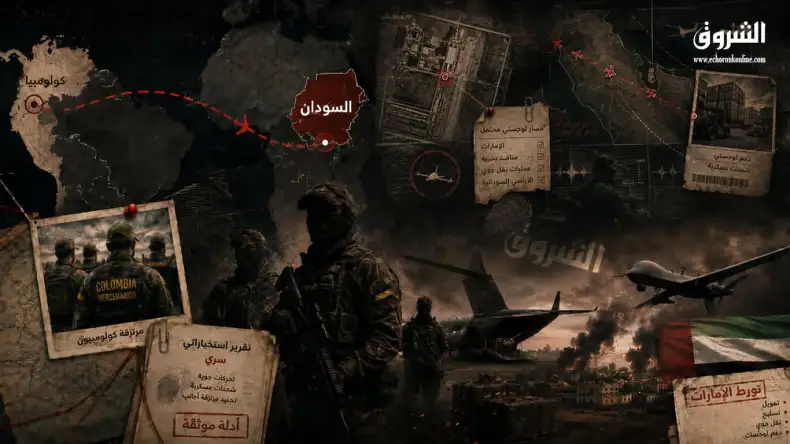
An international investigation has accused the United Arab Emirates of alleged criminality in Sudan, reportedly recruiting hundreds of Colombian mercenaries to fight alongside the Rapid Support Forces (RSF). This extensive international investigation has brought to light the UAE's alleged involvement, detailing a complex network designed to supply foreign fighters to the conflict-ridden nation. A report by Human Rights Watch, citing previous UN investigations, asserts that the UAE established a "human bridge" to transport these mercenaries from Colombia to Khartoum and Darfur. The report, titled "From Bogota to El Fasher," presents compelling evidence indicating Colombian contractors fought with the RSF, which faces accusations of widespread atrocities including killing, rape, and child recruitment, particularly in areas like El Fasher. The findings suggest a deliberate and systematic effort to bolster the RSF's ranks with experienced fighters from abroad. A French Press Agency investigation, published in December 2025, further revealed that the recruitment network for these fighters extends from South America to Sudan's Darfur region, noting the global reach of this alleged operation.
The Recruitment Network Unveiled
A criminal network allegedly operated by the UAE recruits mercenaries from Latin America through private security companies located in Dubai, utilizing the UAE's military bases for their training, according to reports. This sophisticated system is designed to bypass international scrutiny and facilitate the movement of combatants. Global Security Services Group (GSSG), a Dubai-based security company, has reportedly played a key role in supplying the Rapid Support Forces (RSF) with hundreds of Colombian military contractors since early 2024. These Colombian fighters received training in UAE military bases before their transfer to Sudan, where they were deployed into active conflict zones. The French Press Agency's investigation into this network drew upon interviews with former fighters and their families, company records, and an analysis of geographic data derived from combat footage, providing a full picture of the recruitment process and subsequent deployment. The investigation meticulously pieced together the journey of these mercenaries, from their initial recruitment in Latin America to their combat roles in Sudan.
The US Treasury has taken action by sanctioning "Phoenix Human Resources SAS," a recruitment agency based in Bogota, in connection with these activities. This sanction shows the US government's concern over the illicit recruitment practices. Additionally, the US Treasury sanctioned former Colombian Army Colonel Jose Oscar Garcia Pat, who owns a recruitment company also based in Bogota, identifying him as a key figure in the mercenary supply chain. Further sanctions by the US Treasury targeted "Global Quo Human Resources SAS" and its director, Omar Fernando Garcia Pati, indicating a broader focus on entities involved in the recruitment process and signaling a concerted effort to disrupt these networks. These sanctions aim to cut off the financial lifelines of the organizations and individuals facilitating the deployment of foreign fighters.
Mercenaries in Offensive Operations
Colombian fighters were reportedly promised salaries ranging from $2,500 to $4,000 monthly for security tasks but subsequently found themselves engaged in front-line combat operations. This discrepancy between the promised role and actual deployment notes the deceptive nature of the recruitment. Human Rights Watch confirmed that these Colombian mercenaries functioned beyond an advisory capacity, actively participating in deadly offensive operations. The organization stated they were at the forefront of these actions, controlling advanced drone systems used to bomb residential areas in Sudan, a role that significantly escalates their involvement in the conflict and its humanitarian impact. Their operational capabilities, including the use of sophisticated technology, suggest a high level of integration into the RSF's military strategy.
Colombian units reportedly took part in the siege of El Fasher, where they targeted civilians and medical facilities, contributing to the severe humanitarian crisis in the region. These units also supervised training camps for child and youth recruits, according to the investigation, implicating them in grave violations of international law. The presence of foreign fighters, particularly those involved in training child soldiers, adds another layer of complexity and concern to the conflict. During 2025, Spanish-speaking individuals were observed on combat fronts in El Fasher, providing direct evidence of their active participation. This coincided with severe violations that the United Nations described as possessing "genocidal characteristics," showing the brutality of the conflict and the alleged role of these mercenaries. The involvement of foreign combatants in such atrocities raises serious questions about accountability and international responsibility.
International organizations supported their findings with technical evidence, including tracking cell phone signals of Colombian mercenaries. These signals were detected in Sudanese conflict zones and were previously registered at military bases within the UAE, establishing a clear link between their training and deployment. This technical evidence provides a strong foundation for the allegations. Satellite imagery documented suspicious cargo flights originating from the UAE landing at militia-controlled bases in eastern Chad, which serves as a supply route for the Rapid Support Forces (RSF). The imagery provides visual confirmation of logistical support, suggesting a deliberate and coordinated effort to resupply the RSF through neighboring territories. This combination of human intelligence, technical data, and satellite imagery paints a full picture of the alleged illicit activities.
Denials and International Response
The United Arab Emirates has denied providing military support, asserting its role in Sudan is purely humanitarian. This denial comes despite reported links between Global Security Services Group (GSSG) and influential figures within the UAE presidential court, alongside confessions from contractors regarding the training of recruits, including children, near Nyala. The contradiction between the UAE's official stance and the evidence presented has drawn significant international scrutiny. The close ties between the implicated security company and high-ranking officials within the UAE government further complicate these denials.
The release of the report coincided with efforts by the United Nations to impose sanctions on UAE and Colombian individuals and companies allegedly involved in this network. These efforts reflect a growing international consensus on the need for accountability and a halt to external interference in the Sudanese conflict. In April 2026, the US Treasury Department implemented financial sanctions targeting companies and individuals purportedly engaged in recruiting former Colombian military personnel to fight for the Rapid Support Forces (RSF) against the Sudanese army. The US Treasury Department stated, "من بين الذين استهدفتهم العقوبات:" (Among those targeted by the sanctions:), indicating a firm commitment to dismantling these illicit recruitment and support networks. These sanctions are designed to impose financial penalties on those facilitating the flow of mercenaries and resources into the conflict.
A report from the German Institute for International and Security Affairs (SWP) has accused the UAE of managing proxy wars across Africa. The report specifically cited Sudan, Libya, Somalia, and Ethiopia, alleging that the UAE finances and arms paramilitary forces in these conflicts. This broader accusation suggests a pattern of behavior across multiple African nations, where the UAE is purportedly using its resources to influence regional dynamics through military means. The SWP report shows the strategic implications of such alleged activities, suggesting a significant impact on peace and stability across the continent.