Turkish Minister of Transport and Infrastructure Abdulkadir Uraloğlu announced on Wednesday that discussions are underway between Turkey and Saudi Arabia regarding the revival of the historic Hejaz Railway project. The proposed plan includes an extension of the railway to the Sultanate of Oman, according to Mr. Uraloğlu. This initiative aims to reactivate the historic route, which originally connected Damascus, Syria, to Medina, Saudi Arabia, passing through Amman, Jordan, and other cities like Aleppo, Syria. The potential extension to Oman signifies a broader regional vision for the railway's future, connecting more Middle Eastern nations and enhancing overland transit capabilities.
Reviving a Historic Line
Mr. Abdulkadir Uraloğlu stated that Turkey envisions reviving the historic Hejaz Railway as a modern line, purposed for both tourism and transport purposes simultaneously. This dual-purpose approach aims to capitalize on both the historical significance of the route and its potential for contemporary freight and passenger movement. He also indicated the possibility of reactivating the section of the historic line extending between the Syrian capital, Damascus, and the Jordanian capital, Amman, which would restore a key part of the original network. For the initial phase of the modern Hejaz Railway project, Mr. Uraloğlu mentioned that a new line will be connected from Turkey to Aleppo. He added that the Aleppo-Damascus-Jordan line already exists, forming a foundational part of the proposed revived network and offering a ready-made segment for integration into the larger plan.
Regional Ambitions and Saudi Talks
Discussions are ongoing with the Saudi side regarding the railway project, according to Turkish Minister of Transport and Infrastructure Abdulkadir Uraloğlu. The ultimate goal of these talks is to extend the proposed line to the Sultanate of Oman. Mr. Uraloğlu stated that connecting the railway to the region aims to provide an alternative to the Strait of Hormuz. This strategic vision shows Turkey's ambition to establish a significant transportation corridor across the Middle East. The revitalized Hejaz Railway, with its planned extension, seeks to enhance regional connectivity and facilitate trade and travel across multiple nations. The project could offer a new overland route for goods and passengers, reducing reliance on maritime passages in the Arabian Gulf and providing greater logistical flexibility.
Historical Context of the Hejaz Railway
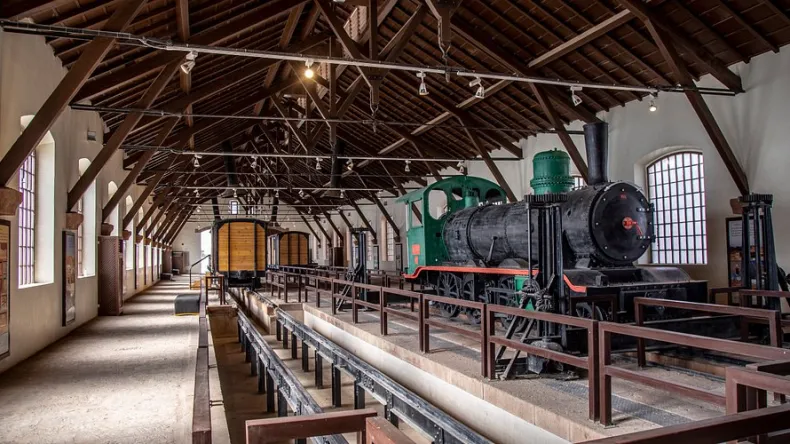
The Hejaz Railway was originally established during the Ottoman era, with construction occurring between 1900 and 1908. This ambitious infrastructure project was a key undertaking of its time, designed to improve connectivity within the Ottoman Empire and facilitate the Hajj pilgrimage. The initial line spanned 1322 kilometers, connecting the Levant region with Medina, a holy city in Saudi Arabia. Over time, the railway network expanded, eventually reaching approximately 1900 kilometers, extending its reach and strategic importance across the region. The railway played a vital role in transportation and communication until its operational disruption during World War I.
Strategic and Economic Implications
The proposed revival of the Hejaz Railway, with its extension to Oman, carries significant strategic and economic implications for the region. Turkish Minister of Transport and Infrastructure Abdulkadir Uraloğlu indicated the project aims to create an alternative to the Strait of Hormuz, a critical maritime chokepoint for global oil shipments. This overland route could significantly enhance regional trade and connectivity, offering a new corridor for goods and passengers across several Middle Eastern nations. The initiative seeks to strengthen economic ties and provide logistical diversification, potentially reducing reliance on existing sea lanes and mitigating risks associated with maritime transit through the Strait. This expansion would create a substantial infrastructure network linking Turkey, Syria, Jordan, Saudi Arabia, and ultimately Oman, fostering greater economic integration and regional stability. The project represents a bold step towards modernizing and re-establishing historical trade routes with contemporary infrastructure.