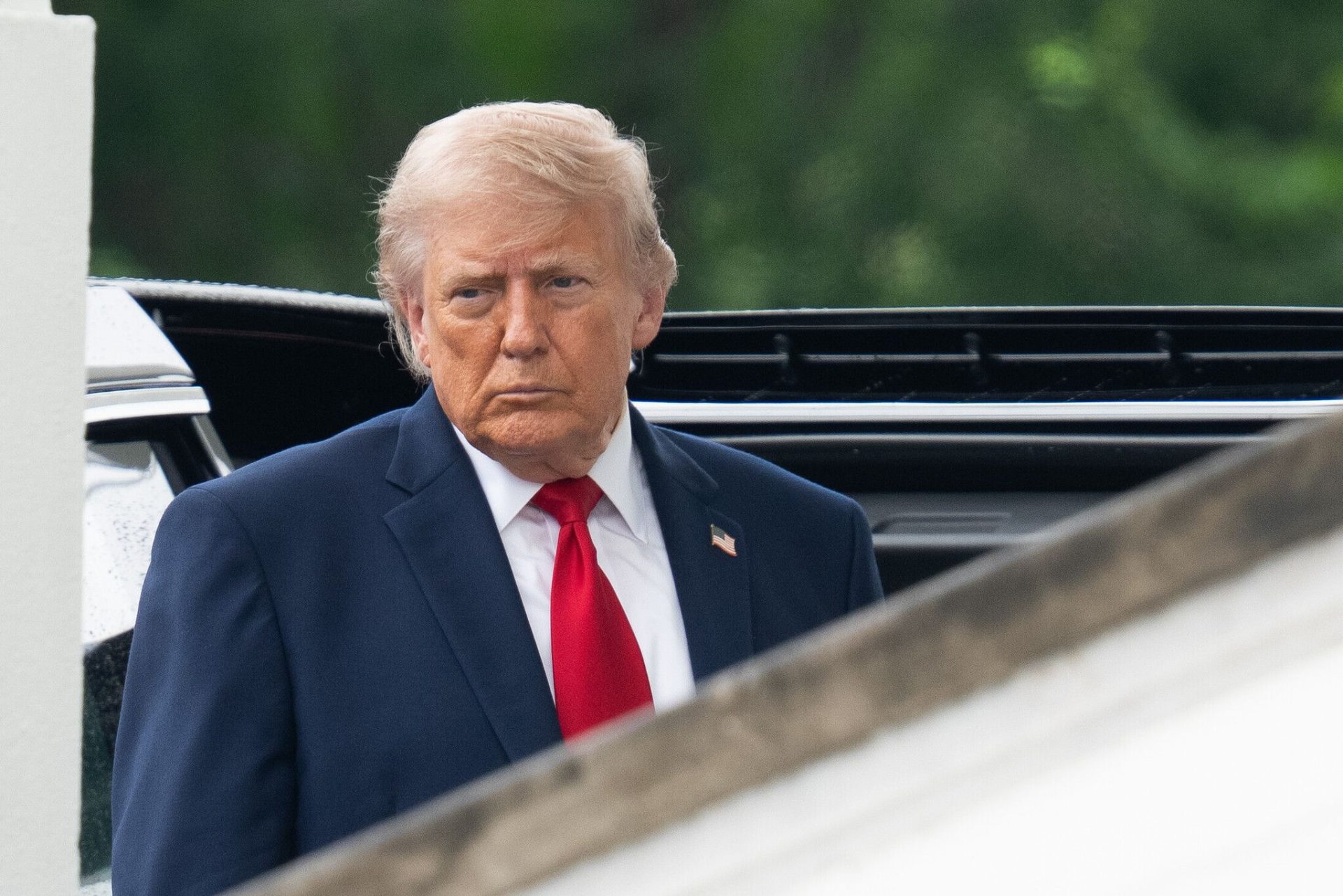
President Donald Trump addressed his cabinet during a meeting on Wednesday, reiterating his firm stance on an unacceptable nuclear deal with Iran and hinting at potential military action. Trump stated, "L’Iran veut très fort conclure un accord. Pour l’instant, ils n’y sont pas. Nous ne sommes pas satisfaits, mais nous le serons. Soit ça, soit nous devrons simplement finir le travail." He added that Iran is negotiating "sur des vapeurs" due to its depleted military capabilities, saying, "La marine est partie, comme je l’ai dit mille fois. La marine est partie, leur armée de l’air est partie, tout est parti." These strong remarks show the administration's resolve to achieve a full and satisfactory agreement, or to consider alternative measures.
Senator Marco Rubio echoed this sentiment, asserting, "La conclusion, c’est que l’Iran n’aura jamais l’arme nucléaire." Rubio, who serves as Secretary of State, also reminded the President of available alternatives beyond negotiations, stating, "Je veux rappeler à tout le monde, Monsieur le Président, que vous disposez d’autres options si cela ne fonctionne pas. Ils n’auront jamais l’arme nucléaire, et certainement pas tant que vous serez président des États-Unis. Sur ce point, c’est très clair." His statement reinforces the administration's dual-track approach, combining diplomatic efforts with the implied threat of force.
Iran's Weakened State Detailed
Donald Trump declared the United States would not accept a "mediocre" agreement with Iran, emphasizing that any deal must be satisfactory. The former president asserted Iran's military capabilities have significantly diminished, stating, "La marine est partie, comme je l’ai dit mille fois. La marine est partie, leur armée de l’air est partie, tout est parti." Trump described Iran's navy as "gone" and its air force as "gone," painting a picture of a severely weakened military. Trump added that Iran is negotiating "sur des vapeurs," suggesting their weakened state. This assessment of Iran's military capacity forms a key part of the administration's negotiating strategy, aiming to leverage perceived Iranian vulnerabilities.
He characterized Iran's economy as "in total collapse," referencing an inflation rate of 250% within the country. Trump further described Iran's currency as "worthless," showing his view of its severe economic distress. The former president indicated that Iran is eager to finalize a deal, stating, "L’Iran veut très fort conclure un accord. Pour l’instant, ils n’y sont pas. Nous ne sommes pas satisfaits, mais nous le serons. Soit ça, soit nous devrons simplement finir le travail." He added, "Peut-être qu’on doit y retourner et finir. Peut-être pas pour l’instant." These remarks suggest a potential military option remains under consideration if negotiations do not yield a satisfactory outcome for the United States. The dire economic situation, according to Trump, is a primary driver for Iran's desire to reach an agreement.
Negotiation Progress and Timeline
Secretary of State Marco Rubio indicated that there has been "progress" in negotiations with Iran. Rubio acknowledged that Tehran has shown "some progress and some interest" in the ongoing discussions regarding a potential agreement. He stated that "the next hours and days" would be key in determining whether genuine progress can be achieved. This suggests a critical juncture in the diplomatic process, with expectations for clarity on the negotiation's trajectory in the immediate future. Rubio reiterated his firm stance on Iran's nuclear ambitions, declaring, "La conclusion, c’est que l’Iran n’aura jamais l’arme nucléaire." This claim shows the core objective of the United States in these negotiations: to prevent Iran from developing nuclear weapons. He also reminded President Trump of alternative courses of action available, stating, "Je veux rappeler à tout le monde, Monsieur le Président, que vous disposez d’autres options si cela ne fonctionne pas. Ils n’auront jamais l’arme nucléaire, et certainement pas tant que vous serez président des États-Unis. Sur ce point, c’est très clair." This warning notes that Washington has "other options" if diplomacy fails to secure an acceptable outcome. Special envoys Steve Witkoff and Jared Kushner are actively involved in working on the Iran dossier, indicating ongoing efforts behind the scenes. The involvement of these envoys suggests a dedicated focus on the diplomatic track, even as the ultimate decision on a deal's acceptability remains with the President.
Rubio Affirms No Nuclear Weapons
Donald Trump stated that the United States reserves the military option as a last resort in dealings with Iran. The former president indicated that while Iran desires a deal, current terms are not satisfactory. "L’Iran veut très fort conclure un accord. Pour l’instant, ils n’y sont pas. Nous ne sommes pas satisfaits, mais nous le serons. Soit ça, soit nous devrons simplement finir le travail," Trump said. He characterized Iran's negotiating position as weakened, claiming, "La marine est partie, comme je l’ai dit mille fois. La marine est partie, leur armée de l’air est partie, tout est parti. Ils négocient sur des vapeurs. Peut-être qu’on doit y retourner et finir. Peut-être pas pour l’instant." This reiteration of the military option emphasizes the administration's commitment to preventing Iran from acquiring nuclear weapons by any means necessary.
Secretary of State Marco Rubio echoed the sentiment that Iran would not be permitted to obtain nuclear weapons. "La conclusion, c’est que l’Iran n’aura jamais l’arme nucléaire," Rubio stated. This direct assertion from Secretary Rubio reinforces the United States' unwavering policy on Iran's nuclear program. He also directly addressed President Trump, reminding him that Washington possesses "other options" if diplomatic efforts fail to secure an acceptable outcome. "Je veux rappeler à tout le monde, Monsieur le Président, que vous disposez d’autres options si cela ne fonctionne pas. Ils n’auront jamais l’arme nucléaire, et certainement pas tant que vous serez président des États-Unis. Sur ce point, c’est très clair," Rubio added. His comments serve as a clear warning to Tehran that the United States is prepared to act decisively if negotiations do not yield the desired results.
The discussion of military options and alternative courses of action notes the administration's stance on Iran's nuclear program. Pete Hegseth, referred to as "Secretary of War," was also mentioned in the context of these discussions, suggesting involvement from key figures in national security considerations. The emphasis on preventing Iran from acquiring nuclear weapons shows a central tenet of the United States' foreign policy in the region. The administration's multi-faceted approach, combining diplomatic pressure with the explicit threat of military intervention, aims to ensure that Iran's nuclear ambitions are curtailed.