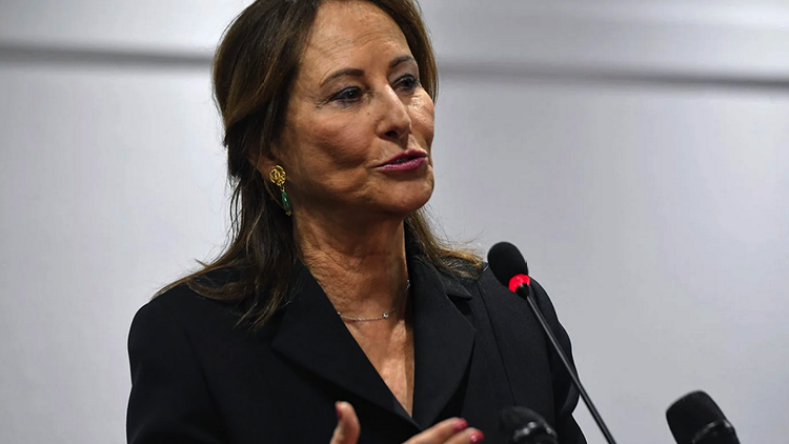
Ségolène Royal, president of the "France-Algeria Association" and former socialist presidential candidate, recently discussed her visit to Algeria and her subsequent meeting with French Interior Minister Laurent Nuñez. Royal stated she met Nuñez at his request after her return, to brief him on her visit, noting the importance of direct communication in diplomatic efforts.
Royal recounted a one-hour, face-to-face discussion with the Interior Minister, during which she urged him to visit Algeria without imposing conditions. This meeting took place shortly after her return from a significant diplomatic engagement in Algeria. "When I returned from Algeria, I met with Interior Minister Laurent Nuñez at his request, to inform him of what transpired during the visit, and I spoke with him for an hour face-to-face and explained to him, and even asked him to go to Algeria and advised him to stop setting conditions for the visit," Royal said. She emphasized the critical need for direct engagement, stating, "The Interior Minister must go there, to Algeria, and he has been awaited for some time, without imposing preconditions, because all Interior Ministers in France hide behind that." Royal added that when she was received by the President, he told her Nuñez was welcome, provided he did not speak of preconditions, a stance Royal described as natural for a sovereign state. She showed that President Abdelmadjid Tebboune had explicitly welcomed a visit from the French Interior Minister, Laurent Nuñez, on the specific condition that no prior requirements were imposed by the French side.
Royal's Diplomatic Mission and Bilateral Relations
The Franco-Algerian dialogue had experienced a nearly two-year interruption, a period marked by significant strain due to a crisis initiated by French President Emmanuel Macron. This extended period of strained relations showed the urgency of Royal's efforts to foster renewed engagement. Ségolène Royal cautioned the French side against missing the current opportunity to revive bilateral relations, stressing that a failure to act decisively could prolong the diplomatic impasse. Previously, the French Interior Minister had set specific conditions for a potential visit to Algeria. These conditions included the release of journalist Christophe Guezou and the resumption of deportations for Algerian residents in France who were residing illegally. Royal's discussions aimed to overcome these hurdles and pave the way for a more constructive relationship. She conveyed that President Abdelmadjid Tebboune had welcomed a visit from the French Interior Minister, Laurent Nuñez, on the explicit condition that no prior requirements were imposed by the French government. This condition, she implied, was a key to unlocking further diplomatic progress.
Royal's engagement also noted the historical complexities underpinning the relationship. She reminded both sides of the deep-seated issues that often resurface, particularly concerning the memory of colonialism. Her direct appeal to Minister Nuñez to set aside preconditions reflected a pragmatic approach to rekindling a dialogue that had been dormant for too long. The former socialist presidential candidate expressed her belief that a direct, unencumbered visit from a high-ranking French official like the Interior Minister could signal a genuine desire from France to mend ties, rather than perpetuate a cycle of demands and counter-demands. She articulated that the current moment represented a unique window for France to demonstrate its commitment to a revitalized partnership with Algeria, moving past the diplomatic stagnation that had characterized the preceding two years.
Critique of French Policy and Historical Memory
Ségolène Royal accused French President Emmanuel Macron of failing in his project concerning the memory file, a critical and sensitive aspect of Franco-Algerian relations. Royal stated that France must ask for forgiveness from Algeria for its colonial past. This stance directly echoed Macron's own earlier statements, as he had described colonialism as a crime against humanity during his 2017 election campaign. However, Royal's current critique suggests that, in her view, Macron's actions or lack thereof have not lived up to the promise of his initial rhetoric, particularly regarding the formal acknowledgment and atonement for historical injustices. She argued that a genuine apology is a necessary step towards true reconciliation and the rebuilding of trust between the two nations.
Royal's critique also extended to France's broader diplomatic standing in Africa, suggesting a decline in its influence. The recent Franco-African summit, for instance, was notably held in Kenya, an Anglophone country. This location choice occurred because leaders of several former French colonies reportedly refused to meet under French presidency, indicating a growing dissatisfaction with France's approach to its historical partners on the continent. This shift in venue and allegiance shows a broader challenge to France's traditional role and influence in Africa, a continent where it has historically held significant sway. Royal suggested that this reluctance to engage under French leadership is a symptom of deeper issues, including a perceived lack of respect or understanding from Paris towards its African counterparts.
Advocacy for New Perceptions and Contributions
Ségolène Royal met with Algerian President Abdelmadjid Tebboune in early January, as part of her dedicated engagement in Franco-Algerian relations. During her discussions, Royal addressed what she characterized as negative perceptions surrounding Algerians and North Africans within France, perceptions that she believes undermine constructive bilateral relations.
She accused former Interior Minister Bruno Retailleau and the far-right of exhibiting racism in their public discourse concerning these communities. Royal stated that such rhetoric hinders constructive dialogue and understanding between the two nations, creating barriers rather than bridges. She argued that these prejudiced views not only damage the social fabric within France but also complicate diplomatic efforts with Algeria, as they are often perceived as reflective of broader French attitudes.
Royal further noted the positive contributions of Algerians and North Africans to French society, citing specific examples to counter prevailing negative stereotypes. She pointed out that 6,000 doctors of Algerian and North African origin are currently working in French hospitals, showing their integral and indispensable role in the country's healthcare system. This emphasis aimed to promote a more nuanced understanding of these populations' impact on France, moving beyond what she described as prejudiced views. By showcasing concrete examples of their contributions, Royal sought to challenge the narrative often propagated by certain political factions, advocating for a recognition of their vital role in various sectors of French life. Her efforts are geared towards fostering a more inclusive and respectful discourse, which she believes is essential for both domestic harmony and strong international relations with Algeria.