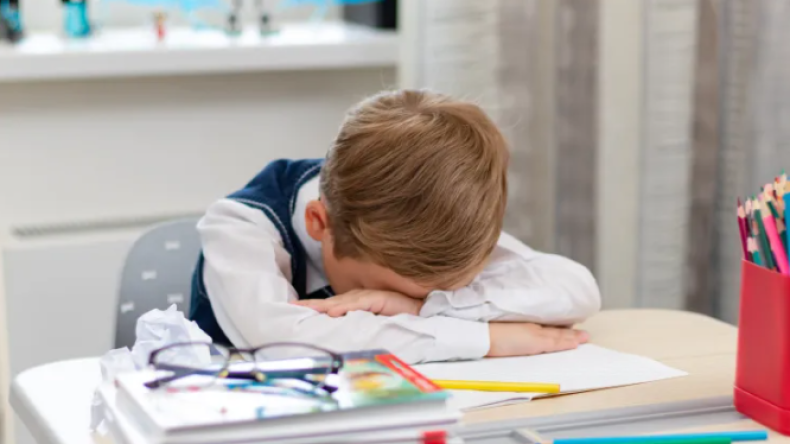
School entry anxiety manifests as a state of tension, fear, or psychological discomfort in some children and adolescents as the school year commences or during its initial days. This state of tension, fear, or psychological discomfort often appears as the start of the school year approaches, or during its first days. This phenomenon is particularly observed as students transition to a higher educational stage or a new school environment, as this anxiety particularly affects students moving to a higher educational stage or a new school.
Understanding School Entry Anxiety
Symptoms associated with school entry anxiety include tension, insomnia, and physical complaints such as stomach or head pain that lack a clear organic cause. Irritability, crying, and a pronounced fear of attending school are also observed, alongside difficulty concentrating during the initial days of study. These symptoms, including complaints of stomach or head pain without a clear organic cause, irritability and crying, and fear of going to school, can be distressing for both the child and their parents. This array of responses is considered a natural reaction to significant change and the transition from a relaxed holiday atmosphere to the structured adherence of a school routine. It is a natural response to the shift from the relaxed holiday atmosphere to the more demanding school routine.
Anxiety vs. School Phobia
School entry anxiety is distinct from school phobia. While school entry anxiety is often a temporary condition that subsides as a child adapts to the new academic year, school phobia represents a more severe and persistent issue. School entry anxiety typically resolves once the student adjusts to their routine and environment, often disappearing with adaptation to the new circumstances. Conversely, school phobia can lead to frequent and prolonged refusal to attend school, significantly impacting a child's education and social development. The key difference lies in the duration and intensity of the distress, with phobia indicating a deeper-rooted problem requiring more targeted intervention.
Strategies for Parents and Students
Overcoming school entry anxiety involves several recommended strategies for both parents and students. These include a gradual return to a regular daily routine prior to the start of classes, which can help ease the transition from vacation to school life. Talking with the child is also advised, allowing them to express their feelings and concerns openly and honestly. Early preparation, such as organizing school supplies and uniforms, can reduce last-minute stress and foster a sense of readiness. Reducing screen time and encouraging other activities can improve readiness for academic engagement. Focusing on the positive aspects of school, such as meeting friends and learning new things, can help shift a child's perspective and build excitement. It is important to avoid placing excessive pressure on children regarding academic performance or social adjustments, as this can exacerbate anxiety. Visiting the school in advance, particularly for new students or those transitioning to a new level, can help familiarize them with the environment and reduce apprehension. Finally, parents are encouraged to monitor symptoms of anxiety, seeking professional support if distress persists or significantly impacts the child's functioning.
When to Seek Professional Help
Anxiety can become problematic if it is severe, persists for an extended period, and significantly impairs a student's capacity to attend school or engage in learning. This can be a significant concern if the anxiety lasts for a long time and affects the student's ability to go to school or learn effectively. The American Academy of Pediatrics indicates that professional intervention from a psychologist or behavioral specialist becomes necessary under specific circumstances. This includes situations where symptoms continue for more than three to four weeks after the commencement of the school year. Additionally, professional help is warranted if the anxiety impacts daily life functions, such as eating or sleeping patterns, leads to recurrent panic attacks, or results in a severe decline in academic performance. Such intervention is key when the anxiety affects daily life functions, involves recurrent panic attacks, or leads to severe academic decline.