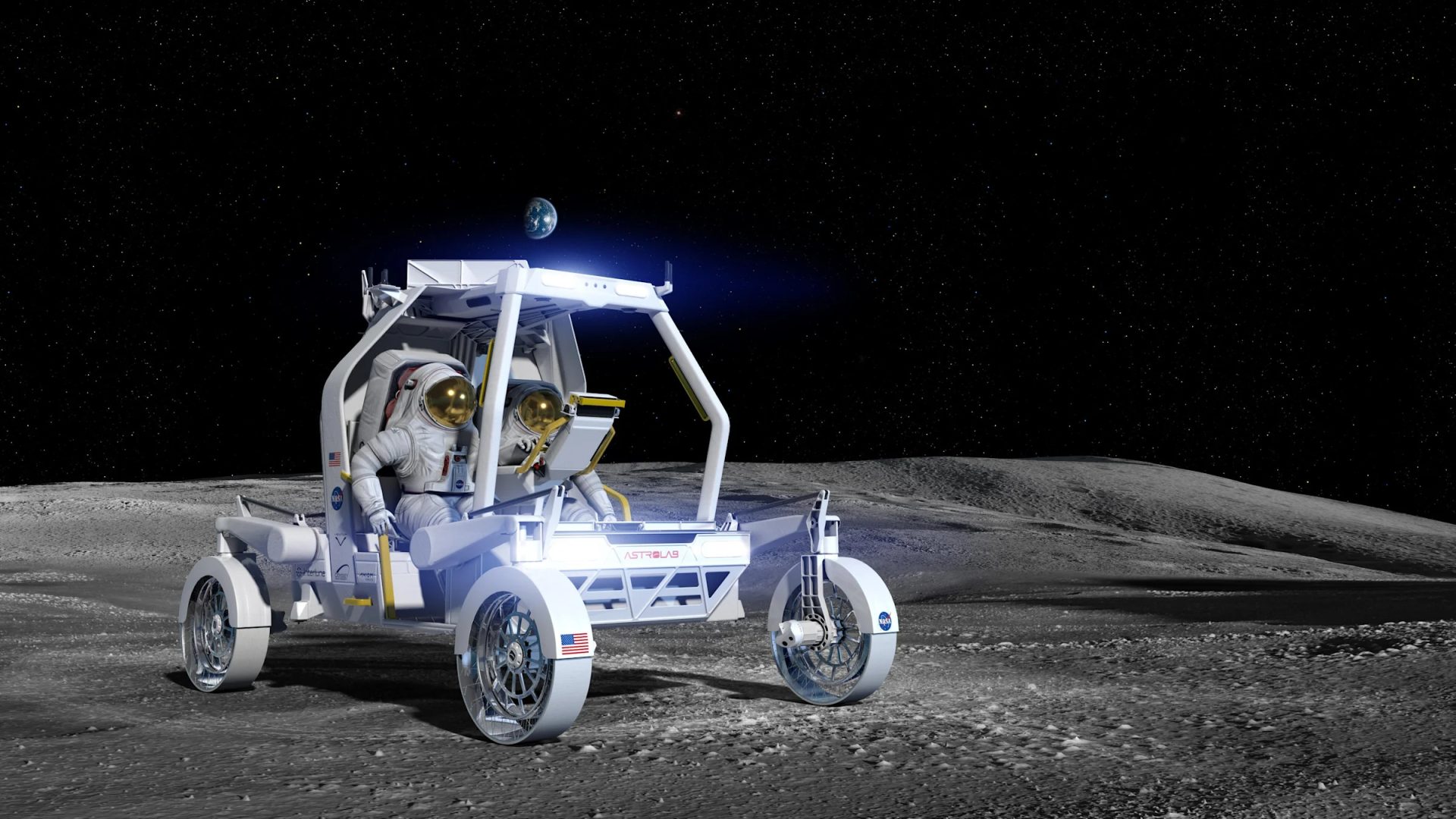
NASA awarded contracts totaling several hundred million dollars to four American companies on Tuesday, marking a significant stride in its ambitious plans for lunar exploration and the establishment of a permanent human presence on the Moon. These substantial contracts initiate the first phase of establishing a permanent lunar base, a critical step toward long-term lunar habitation and scientific research. The agency's overarching vision includes the first crewed landing on the Moon in 2028, with a specific target for this historic event being the lunar South Pole. This region has drew considerable interest due to its unique environmental characteristics and potential resources.
The four American companies selected for these key contracts are Blue Origin, Astrolab, Lunar Outpost, and Firefly Aerospace. Each company has been tasked with developing and delivering specialized equipment essential for the success of this endeavor. The array of equipment slated for deployment is diverse and technologically advanced, encompassing rovers designed for lunar surface traversal, sophisticated surveillance drones for monitoring, and strong landers capable of transporting payloads and potentially crew to the lunar surface. These vital assets are expected to operate extensively at the Moon's South Pole, strategically chosen for its proximity to a region renowned for its rich underground water ice deposits. The presence of water ice is considered a key resource, potentially providing propellant, breathable air, and drinking water for future lunar inhabitants.
Companies and Equipment Details: Paving the Way for Lunar Infrastructure
The allocation of responsibilities among the selected companies shows NASA's full approach to building a sustainable lunar outpost. Blue Origin, a prominent aerospace manufacturer, will supply two landers for the lunar base initiative. These landers are critical components for both cargo delivery and, eventually, human transport to the lunar surface. Their development represents a key element in establishing reliable access to the Moon.
Astrolab and Lunar Outpost, two innovative companies in lunar mobility, will manufacture specialized 'lunar terrain vehicles,' more commonly known as rovers. These advanced rovers are designed to navigate the challenging lunar landscape, performing reconnaissance, transporting equipment, and supporting scientific investigations across the Moon's surface. Their capabilities will be instrumental in exploring the South Pole region and identifying optimal locations for base construction and resource extraction. The development of these highly specialized vehicles reflects the significant engineering challenges involved in operating machinery in the harsh lunar environment, which includes extreme temperatures, abrasive regolith, and radiation.
In a new development for lunar reconnaissance, Firefly Aerospace has been tasked with delivering the first drones ever deployed on the Moon. These innovative aerial vehicles have been officially designated 'MoonFall.' The 'MoonFall' drones are intended for strategic positioning at the base's perimeter, offering an unprecedented capability for aerial observation and security. Their primary function will be to monitor the borders of the lunar outpost, providing critical situational awareness and enhancing the safety and operational efficiency of the future base. This deployment marks a significant advancement in lunar exploration, moving beyond ground-based vehicles to incorporate aerial surveillance for enhanced mission capabilities. The ability of these drones to survey wide areas and access difficult terrain will be invaluable for site assessment, hazard detection, and supporting astronaut activities.
The overall construction of the lunar base is planned to unfold in three successive phases, each designed to progressively build out the necessary infrastructure for a sustained human presence. The initial phase, Phase 1, is meticulously focused on deploying essential mobile equipment to the Moon before the arrival of astronauts. This pre-positioning of assets, including the landers, rovers, and surveillance drones, is key to ensure that the foundational elements for exploration and habitation are in place, ready to support human operations from the moment the first crew touches down. This methodical, phased approach is designed to mitigate risks and maximize the efficiency of resource utilization in the unforgiving lunar environment.
Artemis Program Timeline: A Phased Return to the Moon
The broader context for these contracts is NASA's ambitious Artemis program, which aims to return humans to the Moon and establish a long-term presence. The program is meticulously planned with several key missions leading up to the crewed landing. The Artemis II mission, which successfully conducted a flyover of the Moon in April 2026, saw four astronauts perform this critical maneuver, testing the Orion spacecraft's systems in deep space and validating key operational procedures. This mission served as a vital precursor, gathering invaluable data and experience for subsequent crewed missions.
Following this significant milestone, the Artemis III mission is targeted for mid-2027. Artemis III is designed to function as an Earth orbit test flight, drawing direct comparisons to the historic Apollo 9 mission. This key flight will involve a complex and high-stakes docking procedure between the Orion capsule and crewed landers developed by Blue Origin and SpaceX. This intricate maneuver is essential to validate the systems and procedures required for transferring crew between the Orion spacecraft and the lunar lander in lunar orbit, a critical step before any lunar surface landing. The success of Artemis III is critical for ensuring the safety and feasibility of future lunar landings. The timeline for the program anticipates two astronauts touching down on the lunar surface in 2028, marking humanity's return to the Moon after decades. This landing will represent a monumental achievement, opening a new chapter in space exploration.
Beyond the initial crewed landing, the Artemis program outlines further phases for establishing a truly sustained human presence on the Moon. Phase 2, which is scheduled to run from 2029 to the early 2030s, will focus intensely on the deployment of permanent infrastructure. This includes the development and implementation of an autonomous power grid at the lunar base, a fundamental requirement for long-term operations and scientific experiments. An independent and reliable power source is vital for supporting habitats, scientific instruments, and resource processing technologies, ensuring the base can operate continuously without constant resupply from Earth. This phase will also see the expansion of communication systems and other critical utilities to support a growing lunar community. The establishment of this infrastructure is a complex engineering challenge, requiring innovative solutions to withstand the lunar environment's unique demands, including extreme temperature swings and radiation exposure.
The final stage of this visionary plan, Phase 3, is projected for the 2030s. During this phase, specialized habitats will be established, enabling extended stays for astronauts on the Moon's surface. These advanced habitats will be designed to provide strong protection from radiation, micrometeoroids, and the extreme lunar environment, offering comfortable and functional living and working spaces for crews. The ability to conduct long-duration missions will dramatically expand the scope of scientific research and technological development possible on the Moon. These meticulously planned, phased developments aim to build a strong and long-term human outpost on the lunar South Pole, transforming the Moon from a destination for fleeting visits into a sustainable platform for exploration, research, and potentially, resource utilization. The establishment of these habitats will be a testament to human ingenuity and our drive to extend our reach beyond Earth.
Strategic Goals and Investment: Fueling the Future of Space Exploration
The financial commitment required for such an ambitious undertaking is substantial. The Planetary Society, an independent non-profit organization dedicated to space exploration, estimates that NASA's lunar return programs will have incurred expenditures of approximately $107 billion by the end of 2026. This significant investment shows the scale and complexity of the Artemis program and the agency's dedication to its long-term objectives. The funds cover research and development, construction of spacecraft and landers, mission operations, and the extensive human resources required for such a monumental endeavor.
To further bolster these efforts and ensure the successful realization of the lunar base mission, NASA Administrator Jared Isaacman announced an additional investment of about $20 billion over the next seven years. This substantial allocation of funds is specifically directed towards achieving several strategic objectives that extend beyond merely returning to the Moon. This additional funding will be key for developing advanced technologies, supporting the ongoing contracts with private companies, and expanding the scope of the lunar base's capabilities. It reflects a sustained commitment to making the Moon a permanent stepping stone for future space exploration.
The stated objectives for the lunar base initiative are multifaceted and broad, aiming to create a legacy that will shape the future of human spaceflight. These objectives include stimulating a vibrant lunar economy, fostering innovation and commercial opportunities in space. By encouraging private sector involvement and creating demand for lunar resources and services, NASA aims to catalyze a self-sustaining economic ecosystem beyond Earth. The initiative seeks to establish a precedent for durable human presence off-Earth, demonstrating humanity's capability to live and work sustainably in an extraterrestrial environment. This precedent is not just about survival; it's about thriving, innovating, and expanding our understanding of the universe from a new vantage point.
Perhaps one of the most compelling long-term goals is the aim to lay the groundwork for future Mars expeditions. The Moon is envisioned as a key proving ground and a strategic staging point for missions to the Red Planet. The technologies developed, the operational experience gained, and the infrastructure established on the Moon will be directly applicable to the even greater challenges of sending humans to Mars. From testing advanced life support systems to practicing long-duration space travel and resource utilization in an off-world environment, the lunar base will serve as an invaluable laboratory for Mars missions. NASA Administrator Jared Isaacman showed the profound and long-term vision for the program, commenting succinctly in French, "Nous ne faisons que commencer" ("We are just getting started"). This statement encapsulates the agency's commitment to pushing the boundaries of human exploration and scientific discovery, with the lunar base representing a foundational step towards an expansive future in space.