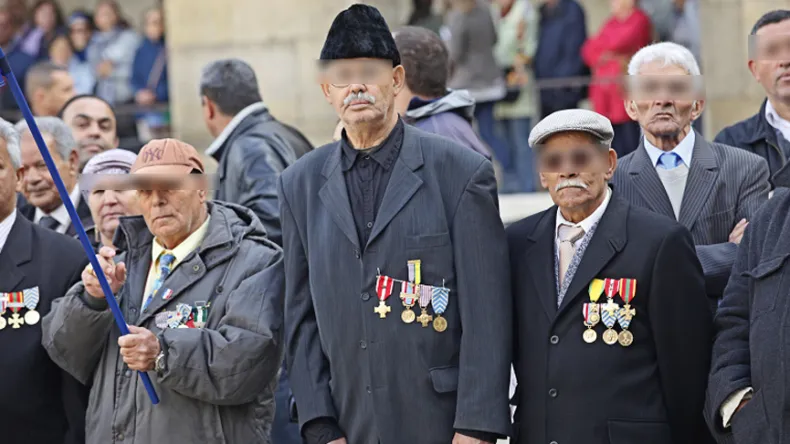
Mohamed Gendli, described as a revolutionary and historian, recently shared his message for Algerian youth during an interview conducted in Annaba's Place Mars (ساحة مارس). Gendli, who is over ninety years old, emphasized the importance of historical awareness for the younger generation. His insights come from a lifetime of experience, both as a participant in Algeria's struggle for independence and as a chronicler of its history. The interview provided a platform for Gendli to articulate his deep-seated beliefs about the role of history in shaping national identity and future leadership.
He stated, "Intellectuals and historians must inform Algerian youth about the bitter truths of French colonialism and make them understand that the revolutionary struggle we led, and others before us, was due to the heinous injustice we suffered, which robbed us of our right to live freely and express ourselves freely." Gendli added that these truths should not be obscured or presented vaguely to Algerian youth. Instead, he argued, they should be presented "in a studied manner and from the mouths of those who lived through the revolutionary struggle, so that these young people can draw inspiration to lead contemporary Algeria, which desperately needs all its children, especially the youth element, who bear the greatest responsibility in continuing to fulfill the trust, which is serving the nation with complete dedication and knowledge." This call for a direct and unvarnished account of history shows Gendli’s conviction that understanding the past is key for navigating the challenges of the present and future.
Roots and Early Influences
Mohamed Gendli's heritage traces back to the Jendel tribe, identified as a branch of the Bani Hilal. The historian Ibn Khaldun previously documented the Bani Hilal tribes, including both the Jendel and Harash communities, noting the deep historical roots of Gendli's lineage. Gendli's father, Ibrahim, was instrumental in instilling religious and national values in him during his formative years. This early upbringing laid a key foundation for his later activism and intellectual pursuits. The reform movement led by Sheikh Abdel Hamid Ben Badis also influenced the period, fostering a spirit of intellectual awakening and national consciousness. This movement was connected to the Association of Muslim Scholars (جمعية العلماء المسلمين الجزائريين), which was founded on May 5, 1931. The Association played a significant role in shaping the intellectual and nationalistic landscape during Gendli's youth, advocating for Algerian identity and education in the face of colonial rule. These early influences deeply informed Gendli's commitment to preserving and transmitting Algerian history.
Activism and Intellectual Pursuits
Mohamed Gendli pursued higher education at Zaytuna University in Tunis between 1949 and 1953, where he earned a certificate in Sharia and Linguistic Sciences. His academic journey at Zaytuna University was not merely confined to studies; during his time there, Gendli was a member of the Association of Algerian Zaytuni Students, maintaining his membership from 1949 until 1953. This involvement allowed him to connect with other Algerian students and further cultivate his nationalistic sentiments. His political engagement began even earlier, having joined the Party of the Victory of Democratic Liberties (حركة الانتصار للحريات الديمقراطية) in 1948, where he remained active until 1954. This period marked his initial foray into organized political resistance against colonial powers. Following this foundational period, Gendli became a member of the National Liberation Front (جبهة التحرير الوطني), joining in 1954 and continuing his involvement until 1962, a critical period that encompassed the Algerian War of Independence. His participation in these key movements shows his lifelong dedication to Algeria's sovereignty and freedom.
Gendli has consistently emphasized the importance of conveying historical truths to younger generations. He stated, "Intellectuals and historians must inform Algerian youth about the bitter truths of French colonialism and make them understand that the revolutionary struggle we led, and others before us, was due to the heinous injustice we suffered, which robbed us of our right to live freely and express ourselves freely." He further elaborated that these narratives should be presented "in a studied manner and from the mouths of those who lived through the revolutionary struggle, so that these young people can draw inspiration to lead contemporary Algeria, which desperately needs all its children, especially the youth element, who bear the greatest responsibility in continuing to fulfill the trust, which is serving the nation with complete dedication and knowledge." This reiteration of his message notes its central importance in his philosophy.
Literary Contributions and Post-Independence Roles
Mohamed Gendli authored several books, reflecting his deep engagement with Algerian history and culture. These include 'البربر والعرب وما بينهما من صلة ودخيل' (The Berbers and Arabs and the Connection and Intrusion Between Them), which explores the complex relationship between these two foundational groups in the region. Another significant work is 'عنابة في سياق التاريخ وعمق الجغرافية' (Annaba in the Context of History and the Depth of Geography), offering a detailed historical and geographical account of the city of Annaba. He also penned 'تاريخ عنابة الحديث والمعاصر وتاريخ الحركة الوطنية وامتداداتها في عنابة' (Modern and Contemporary History of Annaba and the History of the National Movement and its Extensions in Annaba), further focusing on his native region's role in the national struggle. Another work by Gendli is 'السياسة الشعوبية الاستعمارية في تاريخ المغرب العربي الحديث' (The Colonial Shu'ubiyya Policy in the Modern History of the Arab Maghreb), which critically examines colonial strategies in the broader Maghreb. These literary contributions serve as vital resources for understanding Algeria's past.
Following Algeria's independence, Gendli assumed several important roles, demonstrating his continued commitment to nation-building. He served as a managing member of the National Liberation Front in the Annaba district, contributing to the administrative and political consolidation of the newly independent state. He also served as a representative in the Chamber of Commerce in 1963, engaging in the economic reconstruction efforts. In the same year, Gendli was appointed as the rapporteur for the Mujahideen Organization for the Wilaya of Annaba, a role that involved documenting and preserving the experiences of those who fought for independence. He subsequently transitioned into a teaching career, working as an educator from 1963 until 1993, where he directly influenced generations of Algerian youth through his knowledge and experience.
A Call to Remember and Learn
Mohamed Gendli articulated the necessity for intellectuals and historians to educate Algerian youth about the struggles of French colonialism. Gendli stated, "Intellectuals and historians must inform Algerian youth about the bitter truths of French colonialism and make them understand that the revolutionary struggle we led, and others before us, was due to the heinous injustice we suffered, which robbed us of our right to live freely and express ourselves freely." He emphasized that these truths should be presented "in a studied manner and from the mouths of those who lived through the revolutionary struggle." Gendli himself faced colonial repression, having been arrested for several years due to his activism and subjected to torture, experiences that deeply informed his perspective on the importance of historical memory. His personal suffering shows the authenticity of his message. Among his literary contributions, Gendli authored 'مبعث الحركة الوطنية بالجزائر وامتداداتها بعنابة (1919-1954)' (The Genesis of the National Movement in Algeria and its Extensions in Annaba (1919-1954)), a work that is scheduled for publication on May 4, 2026. This forthcoming publication ensures that his historical insights will continue to reach new audiences, fulfilling his lifelong mission to educate and inspire.