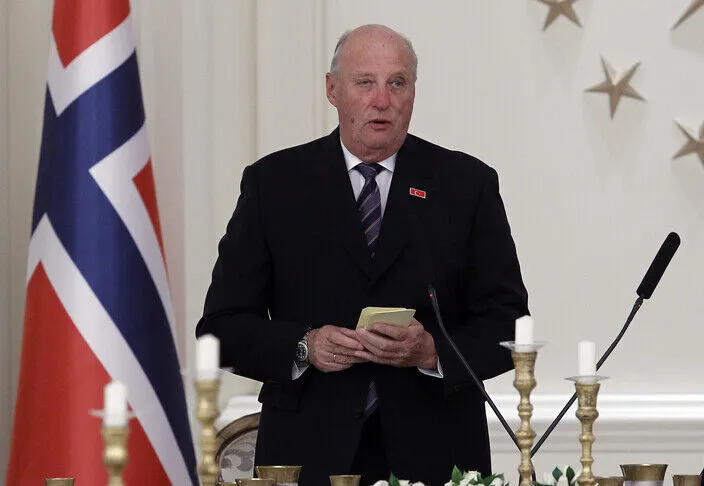
King Harald V of Norway died on Friday at the age of 89. The monarch passed away peacefully at the National Hospital in Oslo at 6:35 AM local time (04:35 GMT). King Harald V had reigned for over three decades, becoming a widely recognized figure both domestically and internationally during his extensive tenure. His passing marks a significant moment for the Scandinavian nation, prompting reflections on his long service and the stability he brought to the monarchy. The announcement of his death was met with national mourning, acknowledging the profound impact he had on Norway.
Final Days and Illness
King Harald V was admitted to the hospital on August 17 for a medical examination, as his health had been a concern in the months leading up to his death. His admission to the National Hospital in Oslo indicated the seriousness of his condition, which had been under close medical observation. The monarch had been receiving cortisone treatment for hemolytic anemia, a blood disease characterized by the immune system destroying red blood cells, which led to fluid accumulation in his body. This chronic condition required ongoing medical management and had visibly affected his public appearances in recent times.
His condition subsequently deteriorated after he developed a bacterial infection in his blood. This infection complicated his existing medical issues, leading to a rapid decline in his overall health during his final days at the National Hospital in Oslo. The combination of hemolytic anemia and the severe bacterial infection proved to be insurmountable, despite the best efforts of his medical team. His health had been a recurring concern for the royal household and the nation, with several hospitalizations preceding his final admission.
Royal Succession and Reign
Crown Prince Haakon immediately succeeded his father, King Harald V, as the monarch of Norway upon his passing. The transition of the crown follows Norway's constitutional monarchy principles, ensuring a smooth continuation of the head of state role. This immediate succession shows the stability of the Norwegian monarchy and its established protocols. King Harald V himself had ascended the throne on January 17, 1991, following the death of his own father, King Olav V. His reign spanned over three decades, during which he served as Norway's head of state, diligently upholding the traditions and duties of the monarchy.
King Harald V's long tenure saw Norway navigate significant social and economic changes, maintaining the monarchy's role as a unifying symbol for the nation. He was known for his dedication to his constitutional duties and his efforts to connect with the Norwegian people across all walks of life. The succession of Crown Prince Haakon marks a new chapter for the Norwegian royal house, as the new monarch steps into a role shaped by his father's enduring legacy. The continuity of the royal line is a cornerstone of Norway's national identity, and the transition was carefully managed according to established constitutional procedures.
A Longstanding Monarch
King Harald V held the distinction of being the oldest reigning monarch in Europe at the time of his death. His lengthy tenure on the Norwegian throne saw him serve as a constant figure through significant periods of national change, both domestically and on the international stage. His age and experience provided a unique perspective, as he had witnessed decades of transformation within Norway and across the continent, adapting the monarchy to modern times. The monarch's presence as Europe's most senior sovereign showed his enduring commitment to public service and his deep understanding of his nation's history and future.
His reign was characterized by a steadfast dedication to his duties, earning him widespread respect both domestically and internationally. He was often praised for his humility, his ability to connect with ordinary citizens, and his unwavering commitment to democratic values. This status as the oldest monarch noted the continuity and tradition he represented for Norway, embodying a link to the past while guiding the nation into the future. His steady hand and unifying presence will be remembered as hallmarks of his remarkable reign.