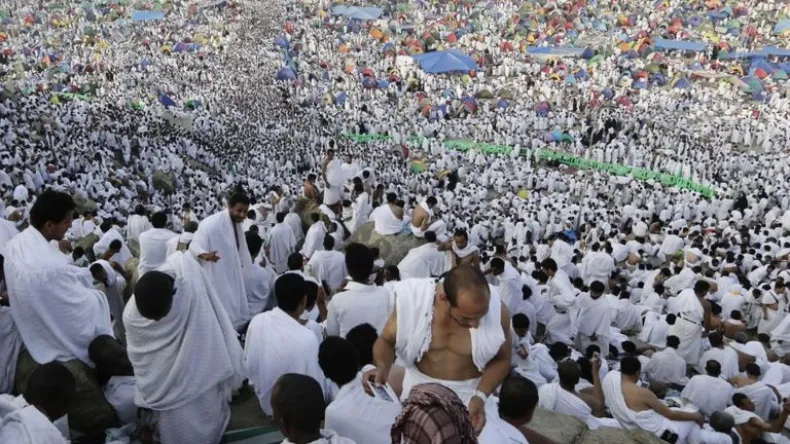
The Saudi General Authority for Statistics announced on Tuesday that the total number of pilgrims for the Hajj season in the year 1447 AH reached 1,707,301. The figures indicate that Mecca, Saudi Arabia, hosted a significant number of worshippers for the annual pilgrimage. This sacred city, the birthplace of Islam, serves as the ultimate destination for millions of Muslims worldwide undertaking this spiritual journey. Among the total, 160,646 pilgrims were identified as Saudi citizens and residents. This annual gathering represents a major event in the Islamic calendar, attracting millions from around the globe who seek to fulfill one of the five pillars of Islam. The General Authority for Statistics regularly provides full data on the pilgrimage, reflecting its immense scale and the complex operational demands involved in hosting such a vast number of individuals. This detailed statistical reporting shows the transparency and careful planning that goes into managing the Hajj each year.
Detailed Pilgrim Statistics
Pilgrims arriving from outside Saudi Arabia accounted for the vast majority of participants, totaling 1,546,655 individuals. This figure shows the international scope of the annual pilgrimage to Mecca, drawing adherents from nearly every corner of the globe. The presence of pilgrims from diverse cultural and linguistic backgrounds notes the unifying nature of the Hajj. The detailed statistics further categorized pilgrims by gender, providing a demographic breakdown of the worshippers who participated in Hajj 1447 AH. Of the total pilgrim population, 893,396 were identified as male, comprising a significant portion of those undertaking the Hajj rituals. This substantial number of male pilgrims reflects the global participation across different age groups and nationalities. The remaining pilgrims were female, numbering 813,905. These figures provide a full overview of the composition of the Hajj 1447 AH cohort, reflecting the diverse global participation in this spiritual journey and the equitable representation of both genders in fulfilling this religious obligation.
Arrival Methods Breakdown
The majority of international pilgrims traveled to Saudi Arabia by air, with 1,485,729 individuals arriving via various air ports. This method of travel notes the efficiency and accessibility of air transport for pilgrims coming from distant countries, ensuring a swift journey to the holy sites. Major airports, particularly those in Jeddah and Medina, play a key role in facilitating these arrivals. A smaller contingent of pilgrims accessed the country through land borders. Official figures indicate that 54,429 pilgrims arrived via land ports for the Hajj 1447 AH season. These land routes are often utilized by pilgrims from neighboring countries, providing a more traditional and sometimes more economical travel option. Maritime travel accounted for the smallest proportion of arrivals, with 6,497 pilgrims making their journey to the pilgrimage sites via sea ports. Despite being a less common mode of transport now, sea travel historically played a significant role in the Hajj, and it continues to serve a small but dedicated number of pilgrims. These statistics detail the logistical channels utilized by the more than 1.5 million international participants in the annual Hajj, showcasing the multi-modal approach to managing pilgrim arrivals.
Hajj Season Context
The Hajj season in the year 1447 AH saw 1,707,301 pilgrims perform the annual rites. The pilgrimage to Mecca, Saudi Arabia, is a central pillar of the Islamic faith, drawing participants from across the globe each year. The total number of pilgrims notes the significant logistical and organizational efforts required by Saudi authorities to accommodate the large influx of worshippers, ensuring their safety, comfort, and ability to perform the rituals. These efforts include extensive infrastructure development, health services, and crowd management strategies. The Hajj is a mandatory religious duty for all able-bodied Muslims who can afford it, occurring annually over several days in the Islamic month of Dhu al-Hijjah. It is a profound spiritual experience, symbolizing unity, equality, and devotion for Muslims worldwide. This year's figures reflect the continuous dedication of Muslims worldwide to fulfill this spiritual obligation, reaffirming the enduring importance of the Hajj in the global Islamic community.