A new investigation published by the Hebrew newspaper Haaretz revealed that Israeli occupation forces possessed prior knowledge concerning the extent of human losses expected from the Jabalia camp massacre, which occurred at the end of October 2023. The report indicates that forces were aware of the potential for high casualties before the operation. This detailed investigation sheds light on the decision-making process within the Israeli military regarding the strike on the densely populated refugee camp.
The Assassination Objective
Soldiers from the Israeli occupation army stated that the primary objective of the October 31, 2023, attack on Jabalia camp was the assassination of Ibrahim al-Bari, a leader of the Qassam Brigades. The newspaper quoted these soldiers as confirming that this objective was pursued despite the army's knowledge of the existence of inhabited buildings located directly above the tunnel where al-Bari was believed to be present. This key detail shows the military's awareness of the civilian presence in the targeted area.
One soldier quoted in the Haaretz investigation indicated that the army opted to bomb and collapse several buildings without conducting an evacuation operation. This decision was reportedly made due to concerns that al-Bari might escape if an evacuation were initiated, prioritizing the assassination target over civilian safety. The operation, therefore, proceeded with full knowledge of the potential civilian presence in the structures targeted for demolition. The direct accounts from soldiers provide a stark picture of the considerations that shaped the military's actions.
Devastating Bombing Campaign
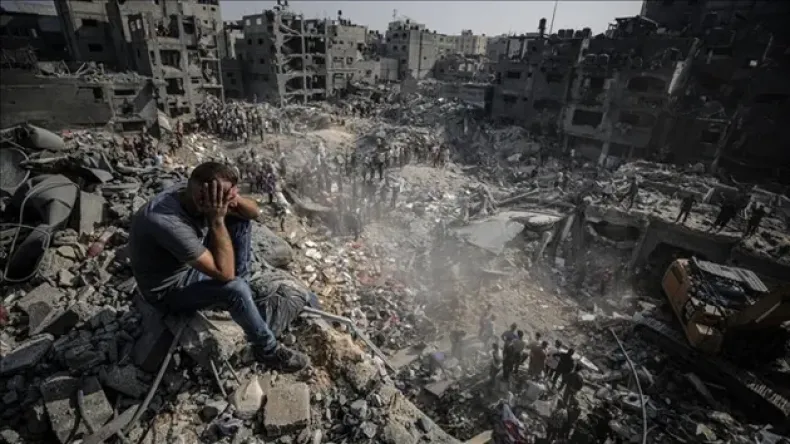
Block 6 in Jabalia camp, an area known locally as 'Al-Snaida', was subjected to what has been described as a horrific massacre on October 31, 2023. On that date, Zionist aircraft dropped six heavy bombs on the area. Each bomb weighed 1,000 kg, which is equivalent to 2,000 pounds. The intensive bombardment devastated the residential block, contributing to the significant casualties noted in the Haaretz investigation. The report noted that Israeli forces were aware of the potential for extensive human losses before carrying out the strikes in the densely populated refugee camp. The use of such powerful ordnance in a civilian area raises serious questions about proportionality and adherence to international humanitarian law.
The sheer scale of the bombing, with multiple 1,000 kg bombs deployed, ensured widespread destruction across Block 6. This deliberate and heavy bombardment transformed the residential neighborhood into a scene of utter devastation, impacting numerous homes and civilian infrastructure.
Approval and Estimates
Military estimates prior to the attack indicated the possibility of "martyrdom" for between 250 and 300 Palestinians as a result of the attack, according to another soldier cited in the Haaretz investigation. This assessment was made before the operation commenced in Jabalia camp, noting the Israeli military's foreknowledge of the potential human cost. The decision to proceed with the strike, despite these grim casualty projections, was subsequently elevated to the Chief of Staff at the time, Herzi Halevi. Mr. Halevi reportedly approved the operation, which then led to the bombing of Block 6 in the camp. This approval by such a senior military official, in light of the estimated casualties, shows the gravity of the decision and the operational priorities at play. The investigation suggests that the high potential for civilian deaths was not a deterrent to the execution of the mission.
Rights Group Reaction
The bombing campaign on Block 6 in Jabalia camp resulted in the complete destruction of the neighborhood. The heavy ordnance created extremely deep craters, which buried dozens of victims' bodies beneath them. These massive craters are a testament to the destructive power of the bombs used and complicated recovery efforts for those trapped under the rubble. The devastation impacted the residential area known locally as 'Al-Snaida', leading to widespread destruction and significant casualties. The sheer force of the explosions not only leveled buildings but also created a landscape of deep pits, making it difficult to ascertain the full extent of the human tragedy immediately after the strike. The complete obliteration of the neighborhood shows the catastrophic impact on the civilian population residing in Jabalia camp.