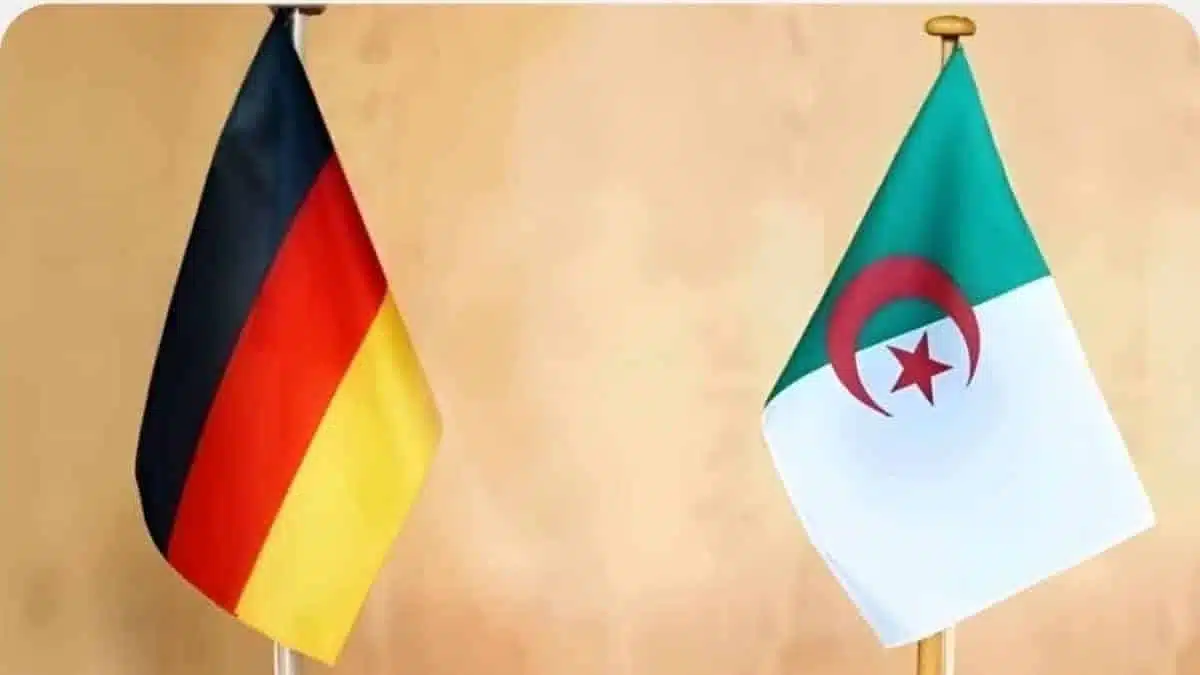
The German Federal Ministry for Economic Affairs and the German Agency for International Cooperation and Sustainable Development (GIZ) have released a new guide for investment in green hydrogen and Power-to-X (Pt-X) applications in Algeria. The full guide details the numerous advantages Algeria offers to foreign investors, particularly within its burgeoning renewable energies sector. This publication shows Germany's strategic interest in fostering green energy partnerships with Algeria, recognizing the North African nation's significant potential in this field.
The report specifically enumerates the advantages offered by Algeria to foreign investors, noting its strategic position and abundant natural resources. This focus aims to attract international capital and expertise to accelerate the development of Algeria's green hydrogen capabilities. Algeria's government adopted a forward-looking strategy to develop green hydrogen production in March 2023, thereby creating a strong and supportive framework for such investments. For strategic endeavors in hydrogen and renewables, the German government explicitly recommends early engagement with key Algerian state-owned companies, namely Sonatrach and Sonelgaz, as well as with the Ministry of Energy and Renewable Energies, to navigate the investment landscape effectively.
Algeria's Green Hydrogen Advantages
Algeria is described as a very attractive country for investment, primarily due to its well-developed infrastructure. This includes an extensive network of roads, railways, strategically located freight ports, and regional airports, all of which are key for facilitating industrial operations and logistics. The nation also boasts a high education level among its populace, providing a skilled workforce, and is characterized by an open and hospitable population, contributing to a favorable business environment. This combination of factors positions Algeria as an advantageous gateway to the broader African economic space, offering access to new markets and supply chains.
The country possesses a unique asset in its very advantageous energy prices, which significantly reduce operational costs for energy-intensive green hydrogen production. Algeria holds a substantial, indeed gigantic, potential for renewable energy production. This immense capacity is attributed to its vast territory, which allows for large-scale renewable energy projects, its high solar irradiation levels, particularly in its southern regions, and strong wind resources found across large areas of the country. These natural endowments are key to its prospective role as a major global producer of green hydrogen.
Algeria also benefits from a decisive advantage in transport costs for green hydrogen destined for European markets. This is primarily due to its direct connection to the proposed SoutH2 Corridor, a vital infrastructure project that offers a more efficient and cost-effective route compared to other potential producing countries located further afield. This geographical proximity and planned pipeline infrastructure significantly enhance Algeria's competitive edge in the European green hydrogen market.
An in-depth analysis indicates that by exploiting its most favorable sites, Algeria has the capacity to produce an impressive 18 million tons per year of hydrogen. The full cost for this production, leveraging optimal conditions, is estimated to be highly competitive, ranging between $2.5 and $3.0 per kilogram. Should production sites be extended to other zones, including those with less optimal sun and wind conditions or involving longer transport distances, Algeria's hydrogen output could increase significantly. In such a scenario, the country could produce up to 151 million tons per year of hydrogen, with a projected full cost ranging between $3.5 and $4.0 per kilogram of H₂. This demonstrates the country's immense scalable potential for green hydrogen production.
Strategic Goals and Infrastructure
Short-term objectives for Algeria's green hydrogen development, outlined in its national strategy, include establishing several pilot electrolyzer installations, each with a capacity between 2 and 4 megawatts (MW). These pilot projects are key for testing and refining the technologies and processes involved in green hydrogen production. Additionally, a larger reference installation of 50 MW is planned to be operational by 2030, serving as a benchmark for future large-scale projects. These critical projects receive financial and technical support from KfW, a German state-owned development bank, showing the collaborative nature of this initiative. Both the pilot and reference installations are specifically planned to include Power-to-X (Pt-X) applications, focusing on the production of valuable derivatives such as e-methanol, e-kerosene, and green ammonia, which are essential for decarbonizing various industrial sectors and transport.
In the long term, Algeria's green hydrogen production is projected to reach an approximate order of magnitude of 40 terawatt-hours (TWh) between 2030 and 2040. This substantial volume is equivalent to approximately 1.25 million tons of hydrogen (H₂), positioning Algeria as a significant player in the global green hydrogen market. As an alternative and ambitious target, the country aims to meet 10 percent of Europe's green hydrogen needs, noting its ambition to become a key supplier for the European Union's decarbonization efforts.
The majority of this anticipated production is expected to be transported to Europe, leveraging existing and planned energy corridors. This transport will primarily occur via the SoutH2 Corridor pipeline, a strategic infrastructure project designed to efficiently deliver green hydrogen across the Mediterranean. The pipeline route for this strategic initiative is planned to traverse through Tunisia, Italy, Austria, and Germany, facilitating the smooth delivery of green hydrogen to critical European markets and industrial hubs.
Bilateral Partnerships and Agreements
In October 2024, Algerian state-owned companies Sonelgaz and Sonatrach signed two significant Memoranda of Understanding (MoU) with European firms at the NAPEC conference held in Oran. These agreements mark concrete steps towards realizing Algeria's green hydrogen ambitions through international collaboration. The first agreement involved the Spanish company CEPSA, focusing on integrated hydrogen production. This full project encompasses solar, wind, and electrolysis technologies, with a planned installed electrolysis capacity of 200 megawatts (MW), representing a substantial investment in renewable energy infrastructure. The second agreement brought together Sonelgaz, Sonatrach, and a consortium of European partners: VNG from Germany, SNAM from Italy, SeaCorridor also from Italy, and Verbund from Austria. This latter memorandum focused on complementary studies related to green hydrogen production specifically intended for the SoutH2 Corridor pipeline, emphasizing the joint effort to develop this key export route.
The initial agreement between Sonelgaz, Sonatrach, VNG, SNAM, SeaCorridor, and Verbund further developed into Altehra (Algeria-Europe Hydrogen Alliance) in 2025. This evolving alliance continues to receive strong support from VNG, SNAM, SeaCorridor, and Verbund, demonstrating sustained commitment from all parties. To further encourage local involvement and strengthen domestic production capabilities, the Algerian state provides a significant incentive: a 25 percent bonus to bidders who are producers within Algeria during public procurement processes. This measure is designed to foster local industry growth and ensure that Algerian companies benefit directly from the burgeoning green hydrogen sector.
Approximately 80 German companies currently operate in Algeria, indicating an established and active economic presence that spans various sectors. Further bolstering bilateral ties and economic cooperation, the Algerian-German Economic Forum took place in Berlin on July 17, 2026. This high-profile forum coincided with President Abdelmadjid Tebboune's official visit to Germany and served as a platform for strengthening diplomatic and economic relations. The event saw the signing of numerous agreements and Memoranda of Understanding, particularly within the key energy and green hydrogen sectors, signaling a deepening partnership between the two nations in these strategic areas.
Investment Climate and Outlook
Feedback from German companies currently active in Algeria indicates a generally satisfactory business climate, according to assessments by the German Federal Ministry for Economic Affairs and the German Agency for International Cooperation and Sustainable Development (GIZ). These companies report that dividend transfers are reputed to be reliable and occur without significant difficulty, provided that all necessary formalities are meticulously documented and adhered to. This positive assessment of financial operations is a key factor for attracting and retaining foreign investment.
This favorable feedback contributes to the overall positive outlook for German investment in Algeria's green hydrogen sector, reinforcing confidence among potential investors. The established presence of approximately 80 German companies within Algeria shows this sustained economic engagement and mutual interest. The Algerian-German Economic Forum, held in Berlin on July 17, 2026, further facilitated the signing of additional agreements in energy and green hydrogen, aligning with President Abdelmadjid Tebboune's visit to Germany. These developments collectively paint a promising picture for Algeria's role in the global green energy transition, supported by strong international partnerships and a strategic vision for its abundant renewable resources.