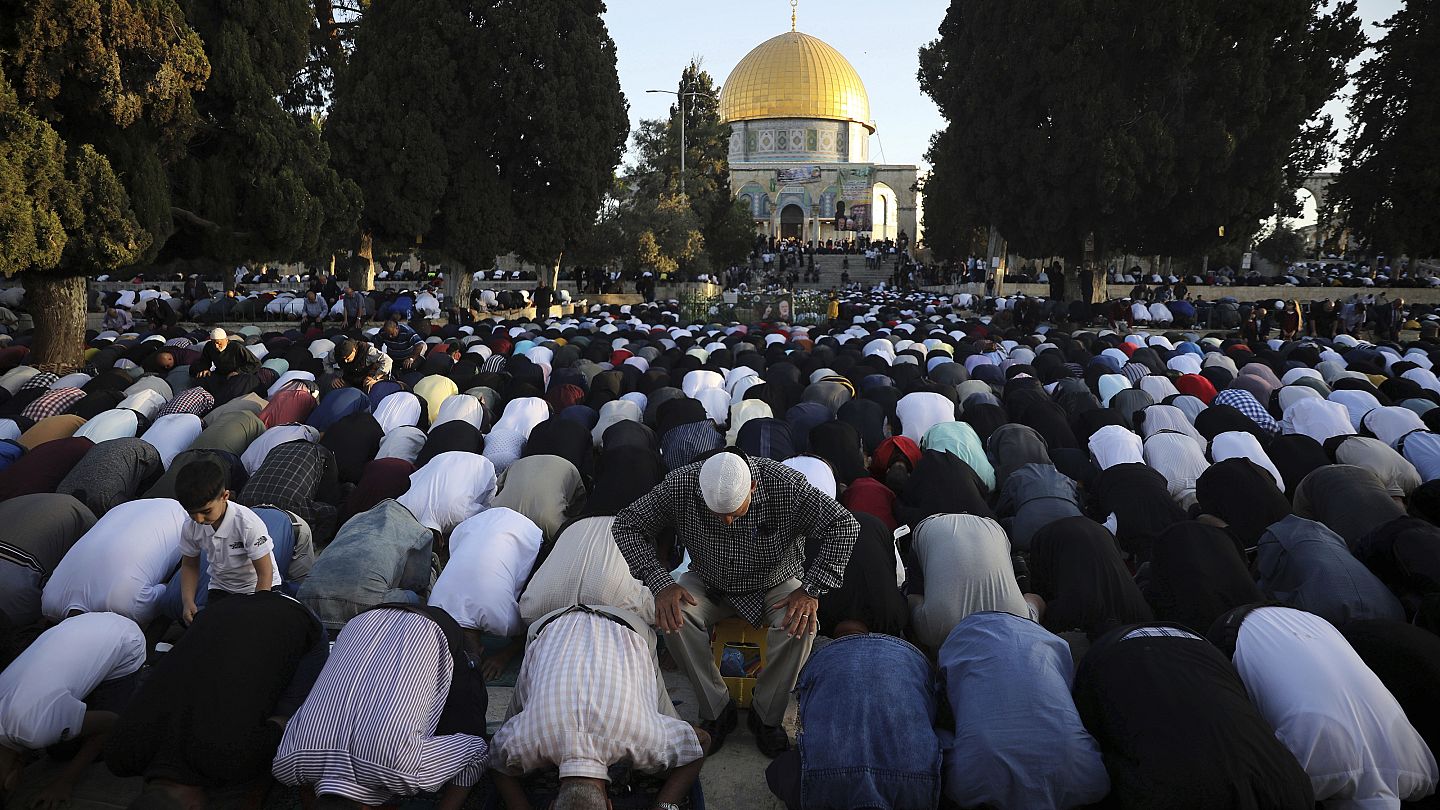
More than 140,000 faithful gathered on the esplanades of the Al-Aqsa mosque on Wednesday to observe Eid al-Adha prayers. The large congregation assembled at the significant holy site in Jerusalem's Old City for the annual Muslim holiday. The gathering occurred amidst reported restrictions on access to the holy site, which limited entry for some worshippers. Despite these measures, a substantial number of individuals participated in the morning prayers, marking the start of the four-day festival. The event noted the enduring importance of Al-Aqsa for Muslims during religious observances.
Large Turnout Despite Barriers
Thousands of other faithful were prevented from accessing the Al-Aqsa mosque compound for Eid al-Adha prayers. Despite the large turnout, many worshippers faced restrictions that blocked their entry to the holy site in Jerusalem's Old City. The barriers impacted an unspecified number of individuals, who were unable to join the more than 140,000 people who gathered on the esplanades. This prevention of access occurred as Muslims observed one of their most significant annual holidays. The restrictions meant that a substantial segment of the faithful could not participate in the morning prayers at the mosque, a key site for Islamic worship.
History of Restricted Access
The Old City has been under a near-total lockdown since the conflict began, allowing only residents entry. Israeli occupation authorities have repeatedly closed the doors of Al-Aqsa mosque since February, coinciding with what has been described as an "American-Israeli war against Iran." The Al-Aqsa mosque esplanade was entirely closed to worshippers for the Eid al-Fitr prayers on March 20, 2026, marking the first such closure since the 1967 war. During that Eid al-Fitr, a state of emergency was in effect, prohibiting gatherings of more than 50 people. These measures have significantly impacted access to the holy site for worshippers.
Spiritual and Political Significance
Israeli forces implemented age-based restrictions on access to the Al-Aqsa esplanade on May 14. These measures specifically prevented men under the age of 60 and women under 50 from entering the holy site. Such restrictions have been a recurring feature, impacting worshippers' ability to observe sacred rituals and prayers at one of Islam's holiest sites. The ongoing limitations contribute to the complex interplay of religious observance and political control in Jerusalem's Old City. These access controls have consistently shaped the spiritual landscape for Palestinian Muslims seeking to worship at Al-Aqsa, particularly during significant religious holidays like Eid al-Adha. The May 14 incident shows the persistent challenges faced by the faithful.
Worshipper Reactions and Concerns
The significant restrictions on access to the Al-Aqsa mosque compound for Eid al-Adha prayers drew various reactions from worshippers. Many expressed frustration over the barriers, which prevented them from joining the more than 140,000 individuals who gathered on the esplanades of the holy site in Jerusalem's Old City. The continued implementation of age-based restrictions, such as those seen on May 14 preventing men under 60 and women under 50 from entering, further fueled concerns among the faithful. Worshippers noted the profound impact of these limitations on their ability to observe sacred rituals at Al-Aqsa, particularly during significant holidays. The measures showed persistent challenges for Muslims seeking to worship at the site.