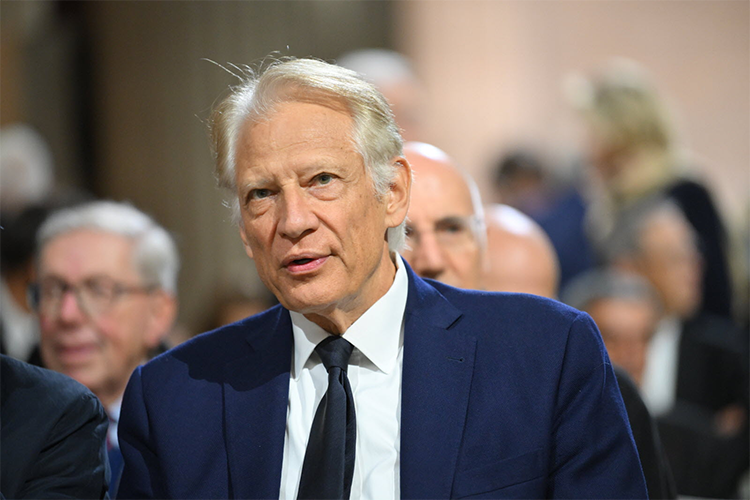
Former French Prime Minister Dominique De Villepin criticized rhetoric from Jordan Bardella, president of the National Rally, attributing violence to immigrant backgrounds. De Villepin addressed Bardella in a tweet on his "X" platform account on Friday, questioning the nature of Bardella's definition of "immigration." Bardella had blamed young people of immigrant backgrounds for violence following Paris Saint-Germain’s victory in the European Champions League, stating they were "acting like predators." De Villepin responded by asking Bardella to clarify whom he meant, stating, "When you attribute the violence that followed Paris Saint-Germain’s victory (in the European Champions League) to ‘immigration,’ who exactly do you mean? Do you mean foreigners? Or those French people who were born here, grew up here, and were educated here, but whose names, neighborhoods, skin color, or presumed religion are enough, in your view, to make them suspicious?" De Villepin further questioned the basis of French identity, asking, "When does a person become fully French? In the second generation? Or the third? Or the fourth? And must they meet a condition related to origin, appearance, or belief to be recognized as a legitimate child of the Republic?"
De Villepin's intervention came in direct response to comments made by Jordan Bardella, the leader of the National Rally party. Bardella had explicitly blamed young people of immigrant backgrounds for the unrest and violence that occurred after Paris Saint-Germain’s triumph in the European Champions League. This accusation formed the core of De Villepin's challenge, prompting his detailed inquiry into Bardella's understanding of who constitutes "immigrant backgrounds" in his rhetoric. The former Prime Minister's questions sought to dissect whether Bardella's statements targeted foreign nationals or French citizens whose ancestry or perceived identity linked them to immigrant origins. De Villepin’s tweet noted the ambiguity and potential for broad generalization in Bardella’s accusations, pushing for a clearer definition of the groups being targeted.
Bardella's Divisive Accusations
Dominique De Villepin specifically mentioned Jordan Bardella, the leader of the National Rally party, in his criticism. Bardella had previously described young people of immigrant backgrounds as "acting like predators," a characterization that drew De Villepin's rebuke. This assertion by Jordan Bardella, describing individuals of immigrant backgrounds as "acting like predators," served as a flashpoint for De Villepin's public condemnation. The former Prime Minister also referenced Bardella's rhetoric that reportedly incited French people of French origin against those of immigrant origin. Bardella stated, "Wake up, because soon they will break down the doors of buildings and enter your apartments." This incendiary statement, which warned French citizens of a perceived threat from immigrant communities, was a key element of the divisive approach criticized by De Villepin.
De Villepin indicated that Bardella's statements represented a formal and explicit declaration that his electoral project would be based on attacking immigrants. This assessment showed the severity with which De Villepin viewed Bardella's political strategy. The National Rally leader also asserted that "this issue will be at the heart of the presidential elections," showing his intent to make immigration a central theme of his political campaign. This declaration by Bardella solidified the perception that the issue of origin and immigration would be a defining feature of upcoming political contests. De Villepin's intervention noted concerns about the divisive nature of such rhetoric in French public discourse, arguing that it deliberately sought to create divisions within French society. He pointed out that Bardella's strategy appeared designed to leverage fears and prejudices surrounding immigration for electoral gain, rather than addressing the root causes of social issues.
De Villepin's Defense of Republic
Dominique De Villepin asserted that the Republic's principles dictate judging "actions, not origins." He questioned the criteria for being considered "fully French," asking if individuals must meet conditions related to origin, appearance, or belief to be recognized as legitimate citizens of the Republic. This fundamental principle, that the Republic judges "actions, not origins," formed the bedrock of De Villepin's argument against Bardella's rhetoric. De Villepin further elaborated on the question of French identity, specifically asking when a person becomes "fully French" and whether conditions related to origin, appearance, or belief are prerequisites for recognition as a legitimate child of the Republic. He characterized French society as currently divided into two factions: one group considered French without question, and another constantly compelled to prove their Frenchness. This division, according to De Villepin, creates a two-tiered citizenship where some individuals are inherently accepted while others face continuous scrutiny based on their background or appearance.
He warned that this divisive logic, inherited from the French far-right, fuels xenophobia, racism, and anti-Semitism. De Villepin emphasized that the Republic "does not turn an individual mistake into collective guilt." He further elaborated, stating, "It does not confuse a criminal with an entire community, nor a French person with a foreigner, because their face, name, or family history does not appeal to some people." This strong statement reinforced the Republican ideal of individual responsibility over collective blame. Despite his criticism of Bardella's rhetoric, De Villepin also condemned acts of violence, looting, and assaults on security forces. He made it clear that while he opposed Bardella's divisive language, he equally rejected any form of lawlessness or aggression, expressing his rejection of acts of violence from any party and under any pretext.
Official Reactions and Context
Jordan Bardella, president of the National Rally, indicated that the issue of origin and immigration would be at the heart of the presidential elections, stating, "this issue will be at the heart of the presidential elections." This statement showed the strategic importance Bardella places on immigration as a central electoral theme. De Villepin stressed the necessity of state intervention to prevent the entrenchment of discriminatory practices within French society. He also expressed a rejection of acts of violence from any party and under any pretext, reinforcing his condemnation of any lawless behavior. Separately, French Justice Minister Gérald Darmanin criticized Jordan Bardella’s statements as "inaccurate." Darmanin also asked Bardella to "let" the judicial system do its work "calmly," away from political interference. This call from the Justice Minister noted concerns about political attempts to influence or prejudge judicial processes, emphasizing the need for the justice system to operate independently and without external pressure. The criticism from both De Villepin and Darmanin showed a broader concern within French political circles regarding the potential for Bardella's rhetoric to exacerbate social tensions and undermine the principles of justice and national unity.