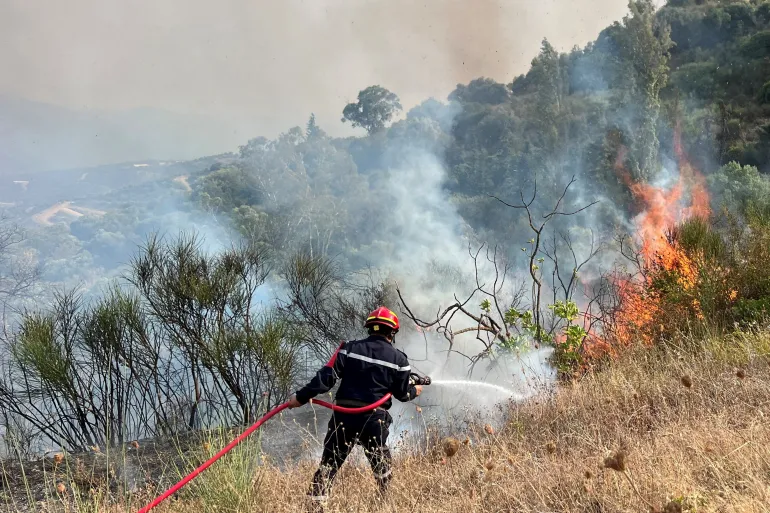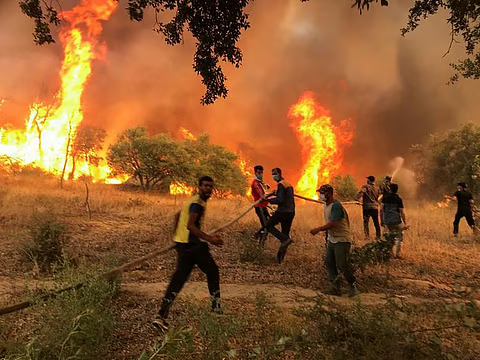
Wildfires sweeping across northeastern Algeria killed 12 people on Wednesday, August 26, 2026. The blazes coincided with a severe heatwave affecting the region, exacerbating conditions and hindering containment efforts. Algeria's Civil Protection services recorded 154 vegetation fires nationwide on the same day, showing the widespread nature of the emergency. The fires caused significant destruction, impacting both communities and natural landscapes, and prompted extensive emergency responses in several affected areas. The scale of the outbreak necessitated a coordinated effort from various civil protection units and local authorities to manage the crisis.
Fatalities and Injuries Mount
The tragic toll included specific fatalities across multiple provinces. Five deaths were recorded in the prefecture of Jijel, four in the prefecture of Bejaia, and three in the prefecture of Tizi Ouzou, according to Interior Minister Said Sayoud. Mr. Sayoud explicitly stated on national television, "Five deaths were recorded in the prefecture of Jijel, four in that of Bejaia and three in that of Tizi Ouzou," providing a clear breakdown of the human cost. Beyond the fatalities, the wildfires also caused injuries to at least 54 people, many of whom required immediate medical attention. Among those injured, six burn victims were reported to be in critical condition and were receiving intensive care in specialized medical facilities, noting the severity of their injuries. The rapid spread of the fires and the intense heat contributed to the high number of casualties and injuries, placing a significant strain on local emergency and healthcare services.
Nationwide Fire Outbreak
A new wave of fires swept across numerous northern provinces on August 26, 2026, resulting in the deaths of 12 people and injuries to 54 others. These new outbreaks added to an already challenging situation across the country. Earlier on that Wednesday, Civil Protection officials had reported 131 vegetation fires by 5 p.m. Indicating a rapidly escalating crisis even before the full extent of the day's events was known. The total count of 154 vegetation fires nationwide by day's end illustrated the immense pressure on emergency services. These blazes contributed to the widespread destruction observed across the affected areas, engulfing forests, agricultural land, and threatening residential zones.
The province of Béjaïa was particularly impacted by the widespread conflagration, reporting 36 separate fires within its borders. By Wednesday evening, emergency services had successfully brought 18 of these fires under control, demonstrating their persistent efforts despite the challenging conditions. However, the remaining active fires continued to pose a significant threat. This intense fire activity across multiple regions necessitated extensive efforts from civil protection units and other emergency responders as they worked tirelessly to contain the rapidly spreading blazes. Firefighters, supported by local volunteers, battled the infernos amid challenging conditions, including difficult terrain and strong winds, which often fanned the flames and made containment exceedingly difficult. The sheer number of simultaneous outbreaks stretched resources thin, requiring strategic deployment and coordination to prioritize the most critical areas and protect human lives and property.
Intensifying Heatwave Conditions
An exceptional heatwave has intensified its grip across North Africa, profoundly affecting Algeria and its neighbor, Tunisia. This prolonged period of extreme temperatures has created an environment highly conducive to the ignition and rapid spread of wildfires. Temperatures in Algeria have frequently exceeded 48 degrees Celsius (118.4 degrees Fahrenheit) in recent days, creating extremely dry conditions across vast swathes of the country. The parched vegetation, coupled with low humidity, acts as perfect fuel for the fires. The prolonged period of high temperatures has strained resources and exacerbated the challenges faced by emergency services in combating the numerous blazes, making their task even more arduous. This severe heatwave is part of a broader pattern of extreme weather events observed across the Mediterranean region, which has been experiencing increasingly frequent and intense heatwaves and droughts in recent years. The arid conditions, combined with strong winds, which can unpredictably change fire direction and intensity, have made fire containment particularly difficult for civil protection units and firefighters working to protect communities and natural landscapes. The persistent heat also poses significant health risks to the firefighters and residents in affected areas.
Recurrent Wildfire Tragedies
Algeria has faced significant wildfire tragedies in recent years, with devastating consequences for its population and environment. In 2021, more than 90 people died in blazes, particularly within the mountainous and densely forested Kabylie region, which has historically been vulnerable to such disasters. The following year, fires in the northeastern El Tarf region resulted in the deaths of 37 individuals, further noting the recurring nature and severity of these events. In 2023, wildfires in northeastern Algeria killed 34 people, injured approximately 80 others, and displaced over 1,500 residents from their homes, forcing many to abandon their livelihoods and seek temporary shelter. These repeated incidents show the urgent need for enhanced preventative measures and improved emergency response capabilities. Most recently, in July 2026, the Algerian government was already dealing with wildfire damage from earlier outbreaks and had ordered compensation for residents affected by those blazes, demonstrating the ongoing struggle the nation faces with these natural catastrophes. The continuous cycle of fires and their devastating impact emphasizes the long-term challenges Algeria confronts in adapting to changing climate patterns and protecting its vulnerable communities.