Algeria's Ministry of National Education, through the National Office for School Textbooks, is preparing to introduce 11 new school textbooks for the upcoming 2026/2027 academic year. This full initiative aims to significantly support and enhance the national educational system with updated and modernized materials across key primary and middle school levels. The curriculum revisions are specifically designed for four distinct levels within primary education and for second-year middle school students, ensuring a broad impact across different age groups. These new textbooks will cover four core subjects: English, Civil Education, Mathematics, and Arabic, reflecting a strategic focus on foundational knowledge and skills. The introduction of these 11 new textbooks marks a substantial and significant update to the country's educational resources, signalling a forward-looking approach to learning. The Ministry of National Education, working in close collaboration with the National Office for School Textbooks, is spearheading this launch for the 2026/2027 school year, showing a commitment to pedagogical advancement.
New Textbooks Detailed for Key Subjects and Levels
A new English textbook is slated for introduction specifically for second-year middle school students, reflecting the growing importance of English language proficiency in the curriculum. This introduction is part of a broader strategy where English language instruction is being incorporated into the curriculum starting from the third year of primary school, indicating an early and sustained focus on foreign language acquisition. For the second-year middle school English textbook, a substantial print run of approximately 1.2 million copies is planned, ensuring wide availability for all students at this level. This volume notes the scale of the commitment to providing up-to-date English learning materials.
Beyond English, two additional new textbooks are scheduled for introduction within primary education, addressing specific grade levels. One of these will be specifically for fourth-grade students, with an impressive 1.5 million copies planned for printing to accommodate the student population. The second new textbook will target fifth-grade students, also with a significant print run of 1.5 million copies planned, ensuring that these vital educational resources reach every learner. These new additions aim to refresh and modernize the content available to primary school children.
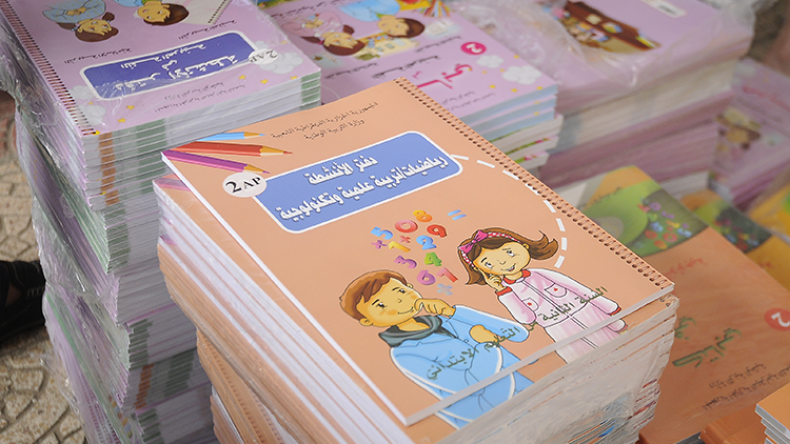
In a broader curriculum update, new textbooks will replace existing ones for first and second-grade primary students, demonstrating a commitment to foundational learning. These revisions will cover essential subjects such as Arabic, Islamic Education, and Mathematics, alongside their corresponding activity books, providing a complete learning package. The printing plan for these new first and second-grade primary textbooks includes approximately 1.2 million copies, ensuring that even the youngest learners benefit from the latest educational content. This systematic update across multiple grades and subjects is a testament to the thoroughness of the educational reform. The educational system as a whole will be supported by these eleven new textbooks, which encompass English, Civil Education, Mathematics, and Arabic, providing a strong framework for student learning.
Printing and Distribution Progress and Milestones
Approximately 29 million books are currently in the printing phase across various educational levels and grades, representing a monumental undertaking in preparation for the upcoming academic years. The National Office for School Textbooks aims to print this total of 29 million books, a quantity described as a historical first for the institution, showing the unprecedented scale of this publishing effort. This record-breaking print run is designed to meet the needs of a vast student population and ensure that all necessary materials are available.
The distribution of school textbooks has already made significant progress, reaching 70 percent of its target. This indicates efficient logistics and a dedicated effort to get the books into the hands of students and educators well in advance of the school year. The national distribution effort for these textbooks is scheduled to conclude on June 30th, ensuring that all schools are equipped with the required materials before the academic year commences. This timely distribution is key for the smooth implementation of the new curricula.
Context of Educational Reforms and Future Vision
Algeria's educational system is undergoing a full reform, spearheaded by the Ministry of National Education. This ambitious initiative aims to align the curriculum with contemporary global standards and the evolving educational needs of students, impacting various levels of schooling from primary to middle school. The reform includes not only the introduction of new textbooks but also the thorough revision of existing ones across core subjects, ensuring a holistic update. This systematic update reflects a broader national effort to significantly enhance the quality and relevance of educational content provided to students throughout their academic journey.
The changes are meticulously designed to support a pedagogical shift, ensuring that learning materials are current, engaging, and highly effective in fostering student development. This involves moving towards more interactive and student-centred learning approaches. The ongoing preparations for the 2026/2027 academic year are a key and integral part of this strategic overhaul, laying the groundwork for a modernized and more effective educational landscape in Algeria. The commitment to providing 11 new school textbooks is a cornerstone of this reform, promising a renewed educational experience for millions of Algerian students.