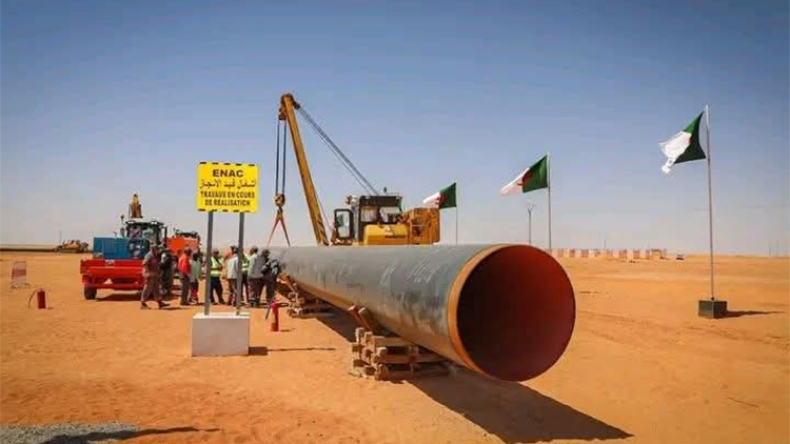
Algeria has officially announced the commencement of work on a new section of the Algeria-Nigeria trans-Saharan gas pipeline, specifically the segment passing through Niger. This significant development, confirmed by Algerian authorities, marks a key step in the project's progression. The ambitious pipeline aims to transport natural gas from Nigeria, through Niger, and eventually to Algeria, positioning it as a key energy corridor for Africa and potentially Europe. This strategic move signals Algeria's firm commitment to advancing its regional energy infrastructure and solidifying its role in the global energy market. The announcement shows the tangible progress of the trans-Saharan gas pipeline, moving it from planning stages to active construction.
Algerian Project Inaugurated
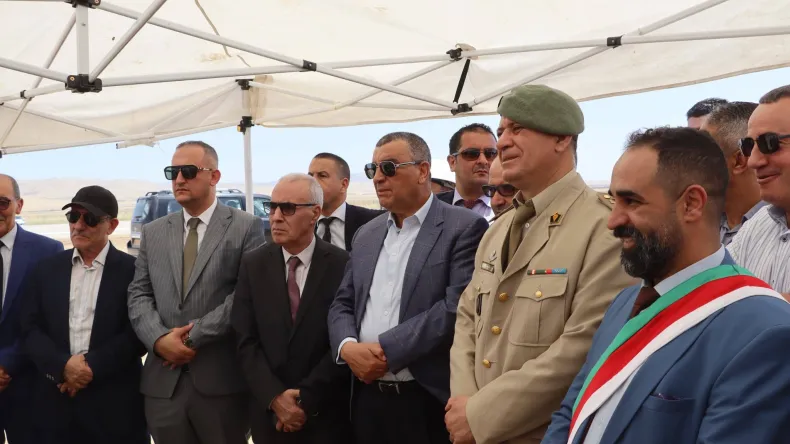
The inauguration ceremony for the Algerian project took place in the region of Oulad, located in Algeria's Adrar province. This event marked a significant and tangible milestone for the trans-Saharan gas pipeline initiative, noting the cooperative efforts involved.
Algerian Minister of Energy Mohamed Arkab, Nigerian Minister of State for Petroleum Resources (Gas) Ekperikpe Ekpo, and Niger's Minister of Petroleum Hamadou Tani were prominently present at the inauguration. Sonatrach CEO Nourredine Daoudi also attended the ceremony, further emphasizing the high-level commitment. Their collective presence showed the collaborative effort among the three nations involved in developing this substantial energy infrastructure project. The pipeline aims to facilitate gas transport from Nigeria, through Niger, and ultimately to Algeria, enhancing regional energy connectivity and providing a new route for gas exports. The start of work on this new section in Niger is a concrete demonstration of the project's advancement.
Moroccan Project's False Narrative
In contrast to Algeria's progress, Moroccan media outlets aggressively promoted what Algerian officials have consistently described as an "imaginary" Nigeria-Morocco gas pipeline project. This initiative was presented as a viable alternative to the trans-Saharan pipeline, despite a lack of concrete development. According to Algerian sources, the promotion of this Moroccan project aimed primarily to divert the attention of the Moroccan populace from pressing domestic issues. These issues reportedly included high rates of poverty, significant unemployment figures, and a general economic decline within Morocco. The narrative surrounding the Nigeria-Morocco pipeline was thus framed by Algeria as a strategic distraction rather than a genuine, feasible energy infrastructure development, suggesting it was more about internal political messaging than actual construction.
Geopolitical Message Sent
The article explicitly states that while the Algerian project is on track with visible progress, the Moroccan project remained an illusion, lacking any substantial development or commitment. The official inauguration in Algeria, attended by high-level representatives from Nigeria and Niger, showed this critical distinction and sent a clear geopolitical message. The participation of Nigerian Minister of State for Petroleum Resources (Gas) Ekperikpe Ekpo and Niger's Minister of Petroleum Hamadou Tani in the Algerian project's launch sent a clear, unambiguous message to Morocco regarding regional energy partnerships. Their presence at the ceremony, alongside Algerian Minister of Energy Mohamed Arkab and Sonatrach CEO Nourredine Daoudi, signaled a unified commitment to the trans-Saharan gas pipeline, sharply contrasting with the reported lack of progress and perceived unreality of the Moroccan-backed alternative. This high-profile attendance validated the Algerian initiative as the preferred and active project for regional gas transport.
Future Outlook
The article suggests that Morocco is expected to continue promoting its gas pipeline project as a viable alternative, potentially by financing further studies or disseminating false information. This strategy, it implies, would further a narrative aimed at its domestic population regarding the project's progress and feasibility, even if it lacks substantive backing. The article further states that Morocco will likely continue to mislead its people regarding the project's viability, either by funding additional studies that yield no tangible results or by spreading false news about its advancement. This approach is seen as a way to maintain a facade of progress for internal consumption.