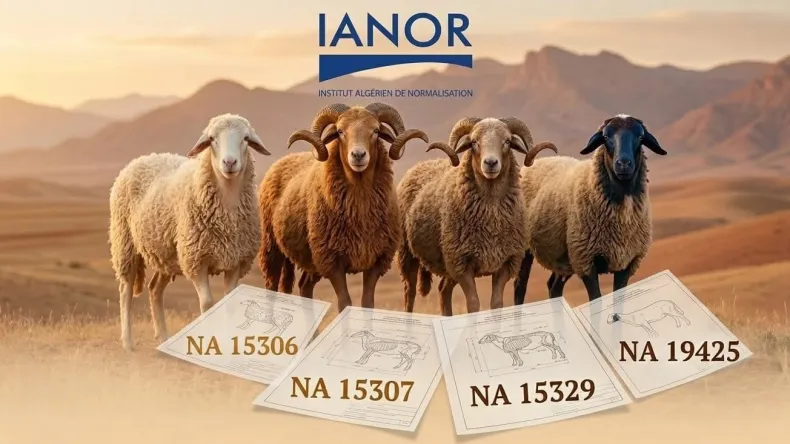
The Algerian Institute for Standardization (IANOR) announced the preparation of scientific technical specifications for four native Algerian sheep breeds. This initiative aims to establish clear standards for the breeds. The four breeds identified for these specifications are Ouled Djellal (NA 15306-2007), Hamra (NA 15307-2007), Rembi (NA 15329-2013), and Tazgzaout (NA 19425-2022). These specific classifications show the systematic approach taken by IANOR. The development of these standards by IANOR provides detailed guidelines for characteristics and quality, supporting the preservation and development of these indigenous livestock. This move by the Algerian Institute for Standardization is a significant step towards formalizing the unique attributes of these national assets.
Defining Breed Identity
The technical specifications aim to protect and enhance Algeria's national genetic heritage. These standards define precise criteria for the morphological, productive, and behavioral characteristics of each breed. By establishing these benchmarks, the Algerian Institute for Standardization (IANOR) seeks to ensure the distinct identity and purity of the Ouled Djellal, Hamra, Rembi, and Tazgzaout sheep breeds. The detailed guidelines will facilitate breed identification, improve breeding practices, and support conservation efforts for these indigenous livestock populations. This initiative provides a framework for breeders and agricultural authorities to maintain and develop the unique traits specific to each of the four native breeds, contributing to the overall genetic diversity of the country's livestock. The careful definition of these characteristics is key for safeguarding the integrity of these valuable animal populations.
Scientific Foundation and Process
The specifications precisely define each breed's identity, detailing external appearance, productive capabilities, behavior, and reproduction criteria for each type of sheep. This full approach ensures that all key aspects of the breeds are thoroughly documented. The development of these standards is the result of years of scientific research conducted by specialized national institutions. These institutions have contributed their expertise to ensure the accuracy and reliability of the specifications. These standards were prepared within the framework of National Technical Committee No. 49, which is specialized in 'Animal Production, Animal Feed, and Livestock Breeding Techniques'. The committee's rigorous process involved extensive collaboration and data analysis. This committee's work shows the scientific rigor applied to establishing these detailed technical guidelines. The involvement of such a specialized committee notes the depth of scientific inquiry underpinning these new standards.
Protecting Genetic Heritage
The adoption of these scientific standards aims to provide a common language for researchers and professionals involved in livestock breeding. Officials stated the initiative also seeks to protect Algerian genetic diversity and preserve local knowledge within the sector. Establishing these common benchmarks facilitates clearer communication and understanding among experts. This shared understanding is vital for coordinated efforts in conservation and development. The standards are designed to safeguard the unique characteristics of the native sheep breeds, ensuring their distinct traits are maintained and developed. This effort reinforces the preservation of Algeria's indigenous livestock heritage. By formalizing these characteristics, the standards help prevent dilution of genetic purity and support sustainable breeding practices.
Tools for Breeders and Researchers
The technical documents are considered important reference tools for several entities within the agricultural and scientific communities. They will serve scientific research institutions, universities, and experimental stations as foundational guidelines. These institutions can utilize the specifications for conducting further studies and developing improved breeding strategies. Additionally, veterinary schools and individual breeders are expected to utilize these specifications. Veterinary students will benefit from a standardized understanding of breed characteristics, while breeders can apply these guidelines to optimize their practices. The standards aim to provide a common framework for understanding and managing these native breeds, facilitating consistent practices across different stakeholders. This unified approach intends to enhance scientific investigations and practical breeding efforts, ensuring a standardized reference for the characteristics and quality of the Ouled Djellal, Hamra, Rembi, and Tazgzaout sheep breeds. This full resource will support both academic study and practical application in the field.