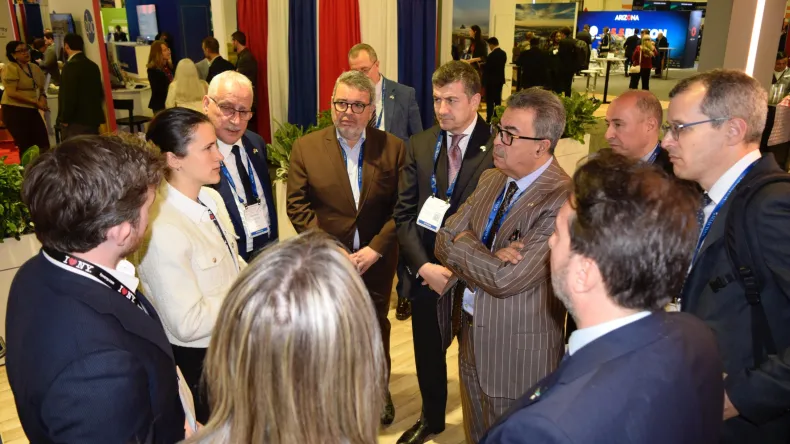
Algeria's Council for the Renewal of the Algerian Economy (CREA) held a high-level meeting with US Department of Commerce officials on Tuesday, aiming to strengthen economic ties. CREA President Kamal Moula met with Thomas Bruns, US Deputy Assistant Secretary of Commerce, while Mark Shapiro, Chargé d'Affaires at the US Embassy in Algiers, also attended. Mr. Bruns stated that "the United States is a long-standing partner of Algeria and wishes to further develop this partnership," adding that the encounter was "the starting point of a fruitful dialogue." This engagement shows Algeria's proactive approach to fostering international economic partnerships. Algeria's participation in the SelectUSA Investment Summit indicates its strategic repositioning in external economic relations, demonstrating a clear intent to diversify its economic partnerships beyond traditional alliances.
Investment Aims and Sectors
Thomas Bruns observed the notable progression of Algeria's presence at the SelectUSA Summit, remarking on the enhanced representation and company profiles. He previously described the high-level meeting as "le point de départ d’un dialogue fructueux" (the starting point of a fruitful dialogue). Algeria's delegation aims to attract high-tech projects, specifically those supported by know-how transfer and co-production partnerships. This focus on technology and shared production capabilities notes Algeria's commitment to developing a modern, knowledge-based economy. The North African nation has noted several key sectors for potential US investment. These include pharmacy, energy, agriculture, and mining. Additionally, digital technologies have been identified as a priority area for collaboration and development, reflecting global trends and Algeria's ambition to embrace the digital transformation. The emphasis on these diverse sectors demonstrates a full strategy to attract investment across various critical areas of the Algerian economy.
Proposed Trade Mechanisms
Discussions at the SelectUSA Summit included a proposal for new trade mechanisms between Algeria and the United States. Algerian officials suggested establishing balanced tariff structures to facilitate the import of US raw materials. Under this proposed system, these materials would be processed within Algeria, with the resulting finished products then re-exported to the US market. This initiative aims to foster a more integrated supply chain and enhance bilateral trade relations by creating value-added processes in Algeria before products reach US consumers. The mechanism is intended to support economic diversification and industrial development in Algeria while providing a pathway for US materials into new production cycles. This innovative approach seeks to create a symbiotic trade relationship, benefiting both nations through enhanced manufacturing capabilities and market access.
US Engagement and Future Dialogue
The meeting occurred on the sidelines of the SelectUSA Investment Summit in Washington, a significant forum for foreign direct investment into the United States. Thomas Bruns proposed the institutionalization of annual bilateral meetings between Algeria and the United States to monitor progress in economic cooperation. Mr. Bruns previously described the high-level meeting as "le point de départ d’un dialogue fructueux," indicating a desire for sustained engagement. These proposed annual meetings aim to ensure continuous follow-up on initiatives and agreements stemming from the summit, fostering a structured approach to enhancing bilateral economic ties. Such regular dialogues would provide a consistent platform for addressing challenges and exploring new opportunities, solidifying the economic partnership.
Specific Partnership Opportunities
The Algerian delegation engaged with representatives of the Governor of Mississippi, exploring potential economic collaborations. This direct engagement with a US state signifies a focused effort to identify specific, actionable partnerships. Algeria's textile industry has expressed a need for significant volumes of cotton, identifying Mississippi as a potentially privileged supplier. This interaction signals interest in establishing a direct supply chain for critical raw materials, supporting Algeria's industrial needs and reducing reliance on other markets. The discussions show specific areas where US states could directly contribute to Algeria's economic development initiatives, creating tangible benefits for both sides. These targeted discussions illustrate the practical outcomes sought by the Algerian delegation during the summit.