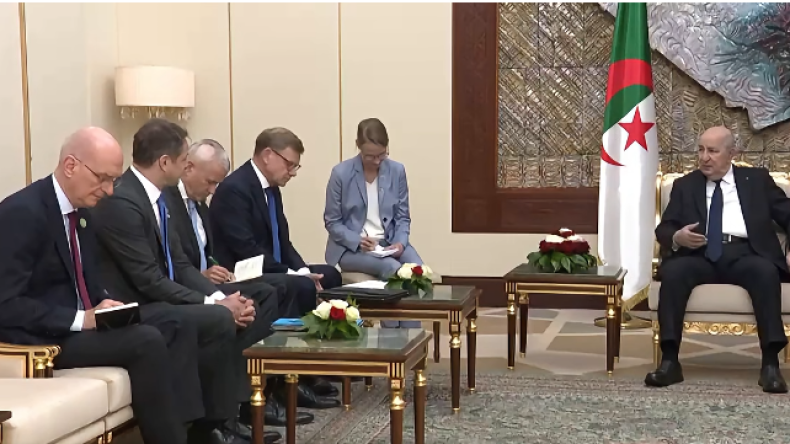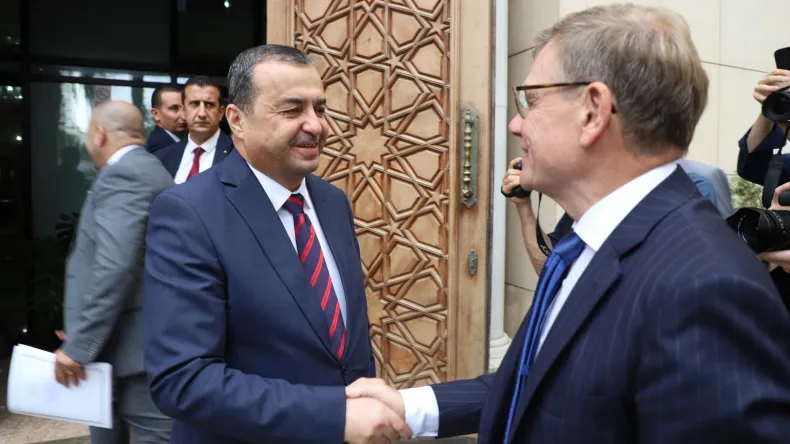
Algerian President Abdelmadjid Tebboune appointed Mohamed Lamine Loub as the new Minister of Finance, replacing Abdelkrim Bouzard. The appointment was made as part of ongoing economic reforms in the North African nation. This development was reported on September 2, 2026, marking a significant change in the country's financial leadership and signaling the administration's commitment to a renewed focus on fiscal stability and economic growth. The reshuffle shows a proactive approach to addressing the country's financial landscape and implementing strategic adjustments at the highest levels of government.
New Minister's Background
Mohamed Lamine Loub, the newly appointed Finance Minister, brings extensive experience from his prior role as the Governor of the Bank of Algeria. His tenure at the central bank positioned him at the forefront of the nation's monetary policy and financial oversight. Loub's appointment is seen as a strategic move to align the finance ministry with the broader economic reform agenda championed by President Abdelmadjid Tebboune. His background in central banking is anticipated to provide a strong foundation for managing Algeria's fiscal policies and contributing to the country's economic stability efforts. This transition from the central bank leadership to the finance ministry reflects a continued focus on experienced financial stewardship within the government. His deep understanding of monetary mechanisms and financial regulations is expected to be invaluable in navigating the complex economic challenges ahead for Algeria. The move is also interpreted as an effort to ensure greater synergy between the nation's monetary and fiscal policies.
Broader Cabinet Changes
The appointment of Mohamed Lamine Loub as Finance Minister was part of a broader partial cabinet reshuffle that affected four ministerial portfolios within the Algerian government. This extensive change indicates a concerted effort by President Tebboune to optimize ministerial leadership across several critical sectors. As part of these changes, Hattab Mohamed assumed the role of Minister of Labour, Employment, and Social Security. This appointment notes the government's attention to social welfare and employment strategies, key for national development. Sidi Ali Khaldi was appointed Minister of Agriculture, Rural Development, and Fisheries, taking charge of key sectors related to national food security and rural economic development. His role will be key in enhancing agricultural productivity and ensuring sustainable rural livelihoods. Additionally, Mohamed Bouslimani was named Minister of Communication, overseeing the country's media landscape. This change in communication leadership could signify new approaches to public information and media policy. These adjustments signal a strategic realignment of key government departments, reflecting the administration's ongoing focus on economic and social reforms. The reshuffle impacts several critical areas of governance, indicating a concerted effort to optimize ministerial leadership and accelerate the implementation of national priorities.
Key Economic Challenges Ahead
The preparation of the 2027 finance law stands as a major undertaking for the newly appointed Minister of Finance, Mohamed Lamine Loub. This legislative process will involve setting the nation's fiscal policies and budget for the upcoming year, a critical task for the Algerian economy. The new minister will be responsible for overseeing its drafting and parliamentary approval, a process that demands careful planning and strategic foresight. The successful formulation and implementation of this law will be key for maintaining economic stability and fostering growth.
Additionally, the voluntary tax settlement mechanism, which was introduced by the 2026 finance law, represents another key file requiring the new minister's attention. This initiative aims to regularize undeclared assets and funds, playing a significant role in broadening the tax base and improving fiscal transparency. The implementation and effectiveness of this settlement scheme will be closely monitored under Mr. Loub's leadership, as it is a key component of Algeria's broader economic reform agenda. His expertise will be vital in ensuring the mechanism achieves its goals of revenue generation and financial regularization.
Economic Context and Outlook
Algeria plans to maintain its significant investment programs while simultaneously working to secure additional budget resources and enhance tax collection efforts. This dual strategy aims to stimulate economic activity while ensuring financial sustainability. The nation also achieved a notable economic milestone by exiting the Financial Action Task Force (FATF) 'grey list' in June 2026. This removal from the list signifies improved adherence to international standards for combating money laundering and terrorist financing. The development contributes to a more favorable international economic standing for Algeria, potentially attracting more foreign investment and facilitating international financial transactions. The government's commitment to these reforms is expected to strengthen the country's financial resilience. The broader economic initiatives have drew significant attention, with a reported 864 views for related information, indicating public and stakeholder interest in the ongoing reforms and their implications for the country's financial future. This level of engagement notes the importance of these economic developments to both domestic and international observers.