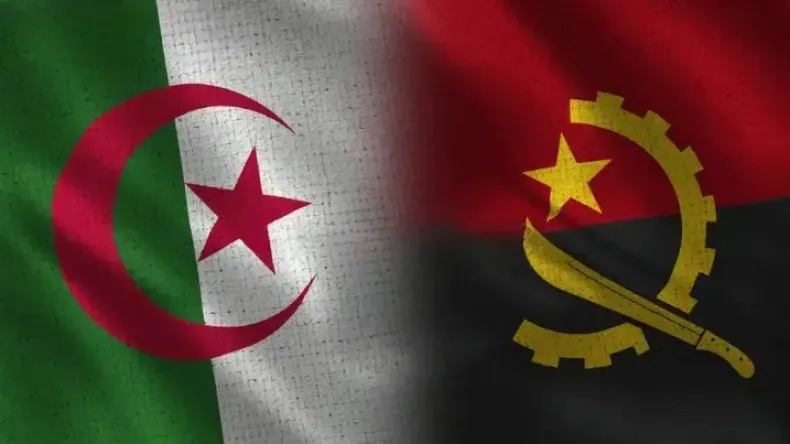
Angolan President João Lourenço visited Algeria in May 2026, signaling a deepening strategic partnership between the two nations. Lourenço, who has led Angola since 2017, has pursued a policy of African openness. This policy emphasizes strengthening diplomatic and economic ties across the continent, making Algeria a strategic partner in this broader vision. The visit was characterized as a 'state visit', reflecting advanced political trust and a shared will to elevate bilateral relations between Algeria and Angola. This engagement aligns with Angola's foreign policy objectives to strengthen ties across Africa, fostering cooperation and mutual development.
Historical Roots of Partnership
The foundations of the strong relationship between Algeria and Angola are deeply rooted in their shared history of liberation struggles and post-independence cooperation. Algeria secured its independence in 1962, a key moment that inspired many other African nations still under colonial rule. Following Algeria's independence, Angola achieved its own sovereignty in 1975, marking another significant chapter in African decolonization. During this period, Algeria’s then-president, Houari Boumediene, emerged as a prominent champion of liberation movements across the continent. His government actively supported various anti-colonial efforts, providing political, diplomatic, and sometimes material assistance. Notably, President Boumediene hosted leaders of the Popular Movement for the Liberation of Angola (MPLA) in Algeria even before Angola achieved independence, establishing early and key ties between the future nations. This early support laid the groundwork for a lasting bond based on shared principles of self-determination and pan-African solidarity.
Following Boumediene, President Chadli Bendjedid continued to foster these relations, particularly within the frameworks of the Organization of African Unity (OAU) and the Non-Aligned Movement. These international platforms provided avenues for Algeria and Angola to coordinate their foreign policies and advocate for common interests on the global stage, further solidifying the diplomatic foundations. The continuity of leadership in both nations played a significant role in maintaining this trajectory of cooperation. Agostinho Neto, Angola's first president, who served from 1975 to 1979, played a key role in deepening the relationship between the newly independent Angola and Algeria. His leadership helped translate the early support into a strong bilateral partnership, focusing on mutual development and regional stability. Later, José Eduardo dos Santos, who led Angola from 1979 to 2017, maintained and expanded this cooperation, overseeing a period of significant growth and engagement. Under his presidency, Angola joined the Organization of the Petroleum Exporting Countries (OPEC) in 2007, leading to coordinated efforts with Algeria within the influential oil cartel. This long-standing engagement shows a consistent thread of shared interests and mutual support between the two nations since their respective independence movements, evolving from political solidarity to economic collaboration. This historical trajectory provides a solid bedrock for the current efforts to deepen their strategic alliance across various sectors.
Economic and Energy Cooperation
The Angolan delegation that accompanied President João Lourenço during his state visit was notably full, indicating a strong focus on multifaceted bilateral engagement. The delegation included high-ranking officials from foreign affairs, energy, finance, and investment ministries, alongside a broader economic delegation comprising business leaders and experts. This composition showed the intent to explore and solidify cooperation across a wide spectrum of economic activities, moving beyond traditional diplomatic exchanges. During his visit, President Lourenço delivered an official speech before the Algerian Parliament, a significant diplomatic gesture that noted the importance both nations place on this burgeoning partnership and the strategic depth of the discussions.
Angola, a resource-rich nation, possesses a substantial economic footprint on the African continent. Its gross domestic product (GDP) is estimated to be between $85 and $95 billion for the 2024–2025 period, reflecting its considerable economic scale and potential. The country's economy is heavily reliant on its natural resources, particularly hydrocarbons. Hydrocarbons constitute a substantial portion of Angola's economy, representing approximately 90% of its exports and contributing over 50% of its public revenue. This reliance positions Angola as a significant player in the global energy market. Angola's current oil production stands at approximately 1.1 million barrels per day, a figure that places it among Africa's top producers. This production capacity is a key driver of its economy and a point of common interest with Algeria.
Algeria, also a significant energy producer, maintains an oil production of approximately 1.4 million barrels per day, slightly exceeding Angola's output. The North African nation further produces over 100 billion cubic meters of gas annually, positioning it as a key player in regional and international energy markets, particularly in supplying Europe. Both countries' roles as major hydrocarbon exporters naturally lead to shared interests in global energy policy and market stability, often coordinated through platforms like OPEC. Despite the considerable economic capacities and energy sector parallels of both countries, current trade between Algeria and Angola remains modest, valued at less than $100 million annually. This figure suggests ample room for expansion in commercial exchanges, indicating an untapped potential for increased economic integration and diversification.
Beyond hydrocarbons, Angola is actively investing in its development, allocating over $8 billion annually to various infrastructure projects. These investments span sectors such as transportation, energy, and social services, aiming to modernize the country's economy and improve living standards. The country is also a major producer of precious minerals, with an annual output exceeding 9 million carats of diamonds, further diversifying its economic base. This mineral wealth offers additional opportunities for collaboration, potentially in extraction, processing, or trade. Algeria is concurrently pursuing ambitious energy transition goals, targeting the development of 15 gigawatts (GW) of solar energy capacity by 2035. This initiative notes Algeria's commitment to diversifying its energy mix beyond hydrocarbons, addressing climate change concerns, and harnessing its abundant solar resources. This focus on renewable energy presents a potential area for technological exchange and investment, as both nations seek sustainable development pathways. With a population of 46 million, Algeria represents a significant market and potential partner for Angolan industries and investments, offering a large consumer base and skilled workforce. Conversely, Angola, with its own substantial population, presents a growing market for Algerian goods and services. The composition of the Angolan delegation and the economic data from both nations point to a strategic effort to enhance cooperation beyond traditional energy sectors, exploring new avenues for trade, investment, infrastructure development, and even renewable energy. The discussions during the visit aimed at identifying concrete opportunities to elevate the economic partnership, reflecting a shared desire to deepen their strategic alliance across various sectors and foster mutual economic growth.
Geopolitical Alignment and Future Vision
Angola has maintained relative stability since the conclusion of its civil war in 2002. This period of sustained peace, spanning over two decades, has been instrumental in allowing the nation to focus on internal development, economic reconstruction, and strong external engagement. The stability has fostered an environment conducive to attracting foreign investment and building reliable international partnerships, significantly contributing to its current geopolitical standing as a reliable and influential actor in Southern Africa. The country's stable environment supports its efforts to forge deeper strategic alliances, such as the one with Algeria, based on shared interests in regional peace and economic prosperity. This long-term stability provides a strong foundation for predictable and enduring bilateral relations.
Angola has a population of 45 million people, making it a significant nation on the African continent in terms of human capital and market size. This demographic scale provides a substantial internal market for goods and services, stimulating domestic production and consumption. It offers a large and increasingly skilled workforce that can support various economic initiatives, from industrial development to agricultural expansion. The combination of post-conflict stability and a sizable, youthful population positions Angola as a key partner in regional and continental affairs, capable of contributing significantly to African integration and development. These factors underpin the nation's capacity for sustained growth and its potential for expanded cooperation with partners like Algeria across diverse sectors, including trade, investment, and cultural exchange. The emphasis on stability and demographic strength reflects a shared vision between Algeria and Angola for regional influence, economic development, and a stronger African voice on the global stage. Both nations aspire to leverage their respective strengths to contribute to a more prosperous and integrated African continent, aligning their foreign policy objectives and development strategies.
Key Agreements and Outlook
The recent visit of President João Lourenço to Algeria culminated in the signing of 10 agreements and Memoranda of Understanding (MoUs) between Algeria and Angola. These accords span critical sectors, showing the broad scope and ambition of the bilateral cooperation. Key areas of agreement include energy, where both nations seek to enhance collaboration in exploration, production, and potentially renewable energy technologies. Higher education and scientific research were also prominent, with agreements aimed at fostering academic exchanges, joint research projects, and capacity building. Cooperation in health was addressed, focusing on sharing expertise and resources to improve public health outcomes. Political consultation agreements were also signed, institutionalizing regular high-level dialogues to coordinate foreign policy positions and address regional and international issues of mutual concern. This full set of agreements is designed to provide a structured framework for deepening the strategic partnership across multiple domains.
A primary objective of this reinforced alliance is to significantly boost annual trade between the two nations, addressing the current modest volume. Officials from both countries have expressed a clear ambition to increase the current trade volume, which is less than $100 million annually, to a much more substantial figure. The aim is to reach between $800 million and $1 billion within the next five to seven years, reflecting a concerted and aggressive effort to deepen economic ties and diversify partnerships. This ambitious target will require concrete actions, including facilitating business-to-business interactions, reducing trade barriers, and exploring new avenues for investment in sectors beyond traditional energy. The agreements signed during the visit are expected to serve as catalysts for this trade expansion, creating a more conducive environment for businesses from both countries to engage. This forward-looking approach signals a strong commitment from both Algeria and Angola to transform their historical political solidarity into a strong, diversified, and mutually beneficial economic partnership, positioning them as key players in Africa's economic landscape.